Channel letter signs are one of the most effective and widely used exterior signage solutions for retail, restaurants, offices, and commercial properties. But one of the most important decisions—often overlooked—is how those letters are mounted.
The mounting method impacts everything: appearance, cost, permitting, electrical access, and long-term maintenance. At FASTSIGNS® Independence, we guide Charlotte businesses through these options every day to ensure the final result looks great and performs reliably.
Here’s a detailed breakdown of the most common channel letter mounting methods—and how to choose the right one for your project.
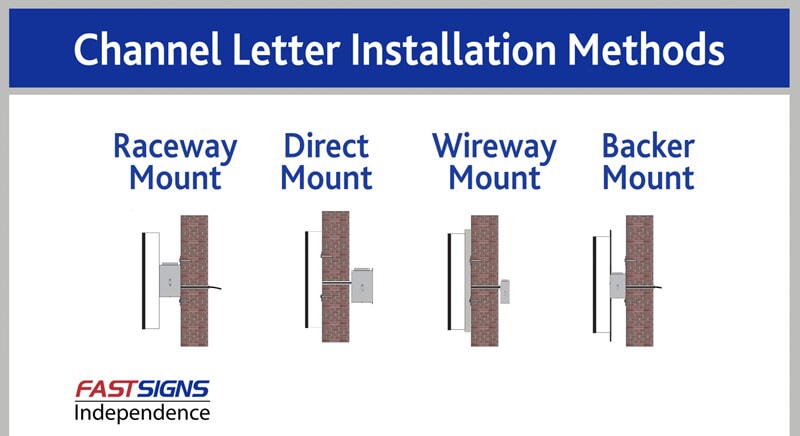
1. Direct Mount (Flush Mount) Channel Letters
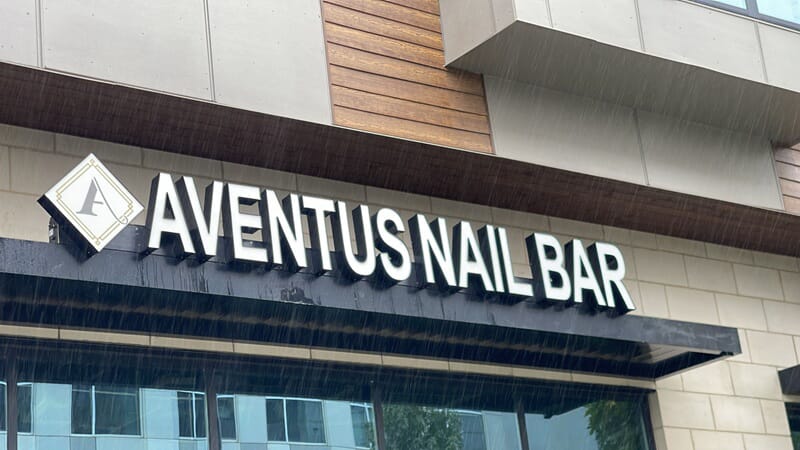
What it is:
Channel letters are mounted individually and directly onto the building façade, with wiring routed through the wall behind each letter.
Best for:
Clean, modern storefronts
New construction or buildings where wall penetration is allowed
Businesses prioritizing a sleek, high-end appearance
Advantages:
Clean and professional look
No visible backing or raceway
Letters appear to “float” on the building
Considerations:
Requires multiple wall penetrations for wiring
Installation is more labor-intensive
Not always allowed by landlords or certain building materials
FASTSIGNS® Insight:
This is the most premium look, often used in high-end retail, restaurants, and corporate buildings across Charlotte.
2. Raceway Mount Channel Letters
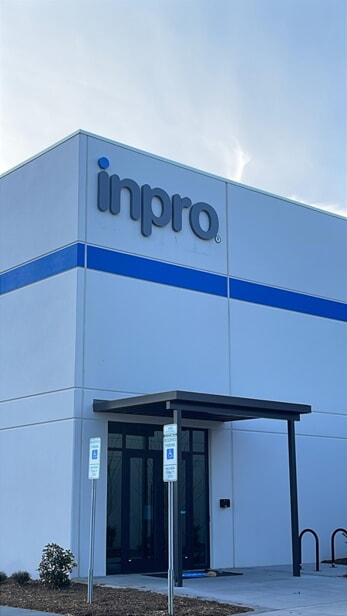
What it is:
All letters are mounted to a painted aluminum box (raceway) that houses the wiring and power supply. The raceway is then mounted to the building with minimal penetration.
Best for:
Existing buildings with electrical limitations
Locations where landlords restrict wall penetrations
Faster, more cost-efficient installations
Advantages:
Fewer holes in the building
Easier installation and servicing
Lower installation cost compared to direct mount
Considerations:
Visible raceway behind letters
Slightly less “clean” look compared to flush mount
FASTSIGNS® Insight:
We color-match raceways to the building façade to minimize visibility and maintain a professional appearance.
3. Wireway Mount (Slim Raceway Alternative)
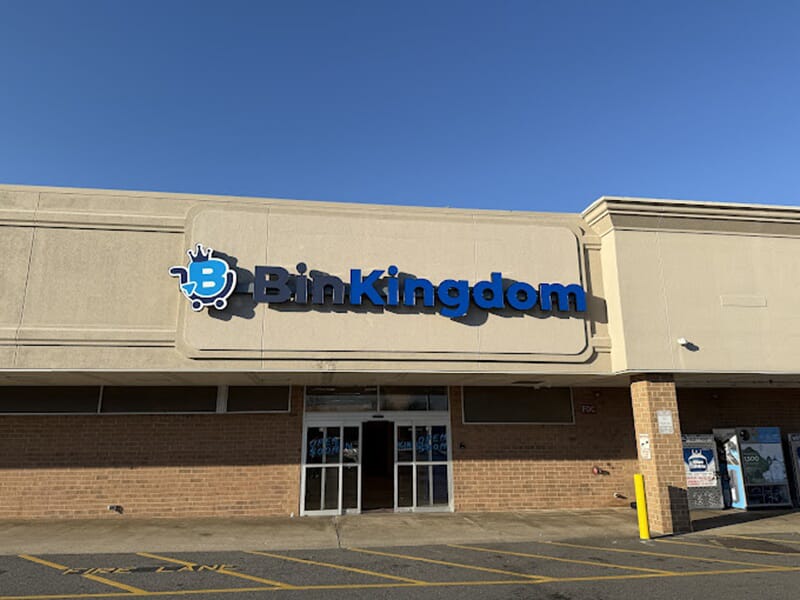
What it is:
A low-profile version of a raceway, typically thinner and less noticeable, used when full raceways are not desirable.
Best for:
Projects needing a cleaner look than a raceway
Buildings with limited electrical access
Clients balancing aesthetics and budget
Advantages:
Less visible than a standard raceway
Easier install than direct mount
Good middle-ground solution
Considerations:
Still slightly visible depending on angle and lighting
Not suitable for all sign sizes or electrical needs
4. Backer Panel Mount (Sign Cabinet or Panel Mount)
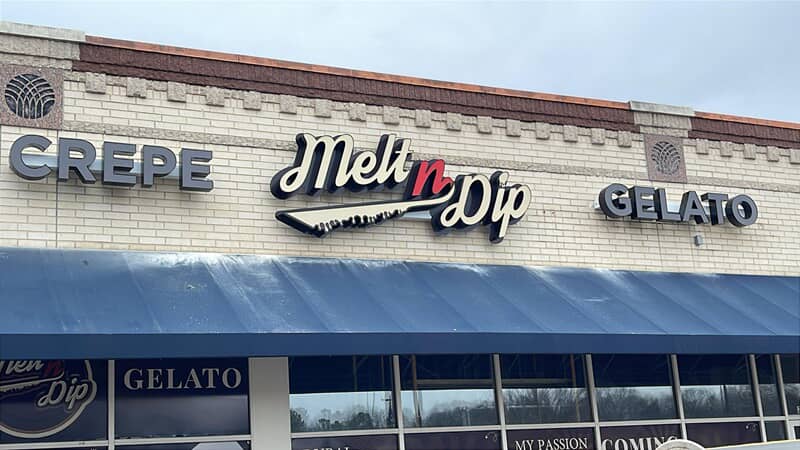
What it is:
Channel letters are mounted onto a solid panel or backer, which is then installed onto the building.
Best for:
Buildings with strict landlord or architectural requirements
Uneven or difficult mounting surfaces (brick, EIFS, etc.)
Design-driven signage with a framed or branded background
Advantages:
No direct penetration for each letter
Creates a strong visual frame for the sign
Allows for contrasting backgrounds to enhance visibility
Considerations:
Adds cost due to additional material
Slightly bulkier appearance
Requires design coordination with building aesthetics
FASTSIGNS® Insight:
Backer panels are often used in shopping centers and multi-tenant properties where uniform signage standards are required.
5. Reverse (Halo-Lit) Mounting Considerations
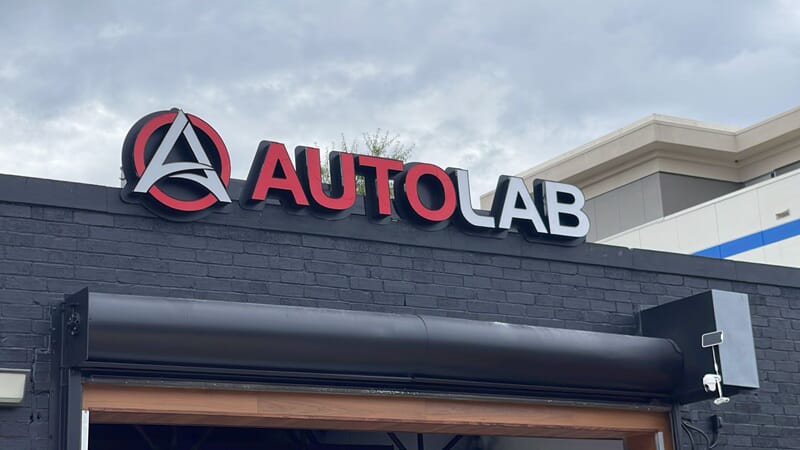
While not a mounting method by itself, halo-lit channel letters are often paired with specific mounting styles.
Key factors:
Requires spacing between letters and wall for glow effect
Works best with direct mount or standoff mounting
Surface behind letters must be clean and reflective
Best for:
High-end branding
Professional offices, salons, restaurants, and corporate environments
How to Choose the Right Mounting Method
Choosing the right option depends on several key factors:
1. Building Type & Landlord Requirements
Shopping centers often require raceways or backer panels
Standalone buildings allow more flexibility
2. Aesthetic Goals
Want a premium, seamless look → Direct mount
Need functional and clean → Raceway or wireway
Want bold design presence → Backer panel
3. Electrical Access
Limited access → Raceway or backer panel
Easy access → Direct mount possible
Why Installation Matters as Much as Design
Even the best-designed channel letters can fail if installed incorrectly. Proper mounting ensures:
Long-term durability
Weather resistance
Electrical safety
Compliance with local City or landlord codes
At FASTSIGNS® Independence, we handle:
Site surveys and measurements
Landlord and city approvals
Electrical coordination
Professional installation by experienced crews
The Right Mounting Makes All the Difference
Channel letters are a powerful investment—but the mounting method determines how that investment performs over time. Whether you prioritize aesthetics, cost, or speed, choosing the right installation approach ensures your sign delivers maximum visibility, durability, and brand impact.
Need help deciding what’s best for your building?
Contact FASTSIGNS® Independence for a site evaluation. We’ll walk your property, review requirements, and recommend the best channel letter solution for your business.