Regulatory, Safety & Accessible Signage for San Jose Facilities
Regulatory signs, safety signs, and custom accessible signage serve different purposes, but they often need to work together. A coordinated program can include room identification, directional information, required actions, restrictions, emergency messages, and notices for customers, visitors, and employees.
Signage options for your facility:
- Regulatory Signs: Whether you’re managing a construction site, private property, or any business facility, our team at FASTSIGNS® of San Jose-Campbell designs regulatory signs to provide clear and effective communication. They can communicate policies, precautions, laws, regulations, and property requirements in high-traffic or regulated areas.
- Safety Signs: Safety signs communicate hazards, required actions, prohibitions, emergency information, and safety-equipment locations. Our team at FASTSIGNS® of San Jose-Campbell organizes these messages so customers, visitors, and employees can identify instructions and warnings throughout a facility.
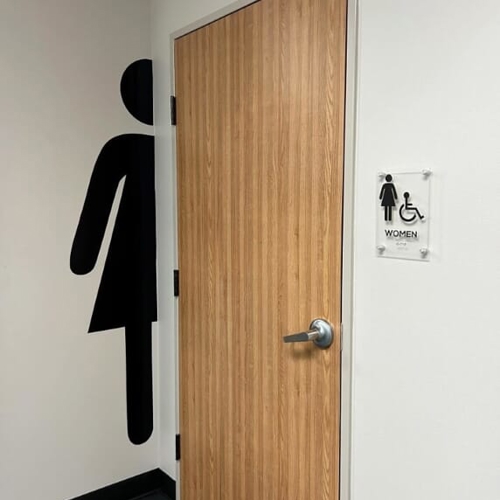
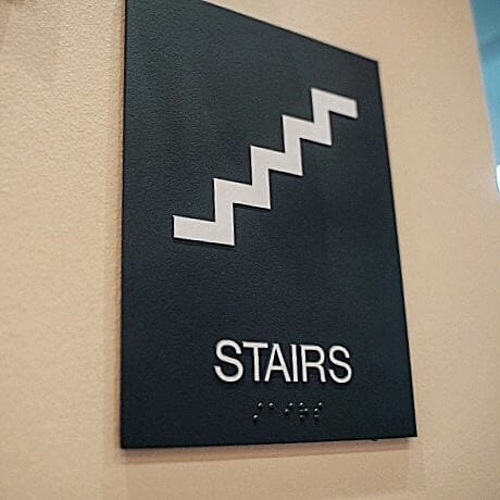
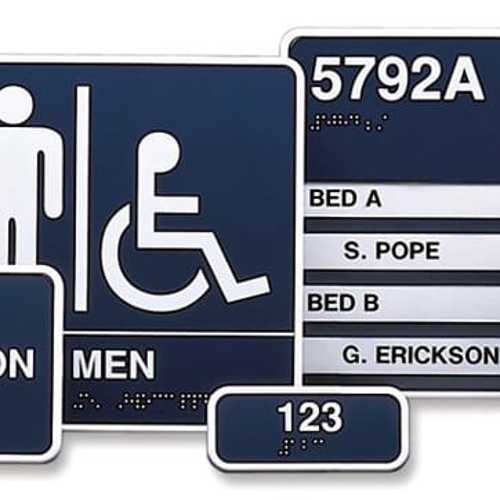
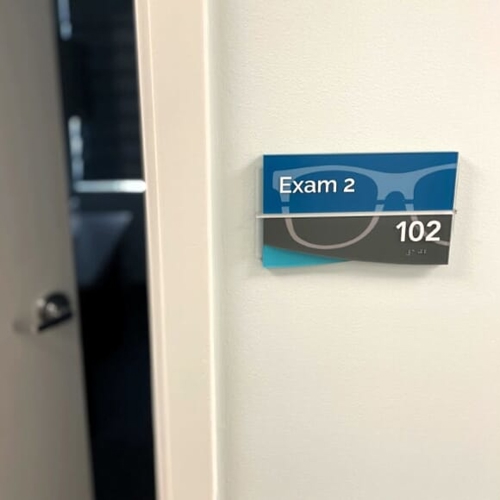
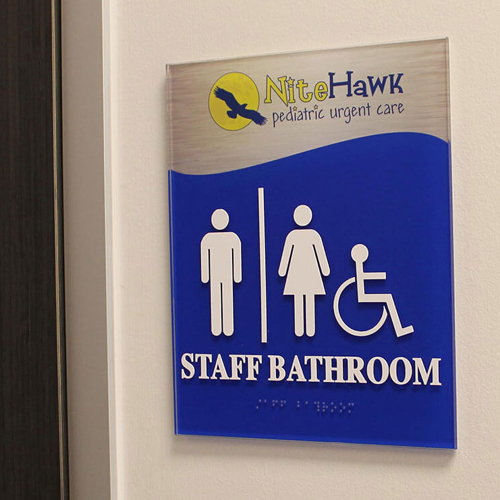
- Custom Accessible Signage: The Americans with Disabilities Act addresses accessibility for people with disabilities. Our FASTSIGNS® of San Jose-Campbell team provides ADA signage that can integrate into your overall visual communication strategy. Depending on the facility and sign type, accessible signs may be required in multiple locations.
Common locations for regulatory and accessible signs:
- Stairwells
- Elevators
- Fire exits
- Entryways
- Permanent rooms and spaces
- Parking lots
Learn more about our ADA signage in San Jose by calling us at (408) 676-3217, or request a free quote online to get started!
ADA Sign Requirements to Review Before Ordering
Creating ADA-compliant signage involves several specific requirements. The 2010 ADA Standards for Accessible Design address tactile characters, Braille, visual contrast, non-glare finishes, character proportions, character height, spacing, and mounting conditions. Not every requirement applies to every sign, so the sign type, location, facility, and governing standards must be reviewed.
Design and placement considerations can include:
- Contrast: Visual characters and their backgrounds may need light-on-dark or dark-on-light contrast and a non-glare finish.
- Character Style: Applicable tactile characters use uppercase sans-serif lettering, while rules for visual-only characters can differ.
- Pictograms: Certain pictograms require corresponding tactile text descriptors.
- Braille: Applicable signs use Grade 2 Braille positioned below the corresponding tactile text.
- Border Spacing: Spacing from raised borders and decorative elements must be reviewed, with some layouts calling for at least 3/8 inch.
- Tactile Character Height: Applicable raised characters may range from 5/8 inch to 2 inches and require appropriate spacing.
- Mounting Height: For applicable tactile signs, the lowest tactile-character baseline is at least 48 inches and the highest is no more than 60 inches above the finished floor.
- Door Placement: Applicable tactile signs are generally installed on the latch side of the door or on the nearest adjacent wall when the required space isn’t available.
Our team can help identify these design questions and produce signage for the specifications provided. Final requirements can depend on federal standards, the facility, project-specific conditions, local rules, and the approving authority.
At FASTSIGNS® of San Jose-Campbell, we offer a wide range of ADA signage that blends functionality and style. We review materials, finishes, colors, contrast, message length, viewing distance, and mounting conditions. We can design signage with you that complements your business environment while addressing the regulatory requirements identified for the project.
San Jose Sign Code & Project Planning
Federal accessibility standards and the San Jose Sign Code address different parts of a signage project. San José Municipal Code Title 23 covers topics such as wayfinding, traffic safety, commerce, visual clutter, sign maintenance, and compatibility between signage and building architecture. It shouldn’t be treated as interchangeable with federal accessibility requirements.
Exterior, parking, directional, and building signs may require local review or a sign permit, depending on the project. Confirming those details before production can clarify the specifications that should guide design, placement, and fabrication. We can coordinate visual communication and project details while you verify requirements with the property owner and applicable authority.
Why ADA-Compliant & Regulatory Signage Matters in San Jose, CA
Well-crafted and strategically placed signs support safety, accessibility, organization, and clear communication. They can help people identify rooms, understand restrictions, locate exits, follow directions, and recognize important safety information.
Missing, incorrect, or poorly placed signage can create confusion and may fail to address applicable accessibility or facility requirements. However, no single sign automatically prevents fines, legal disputes, injuries, or liability. Compliance depends on the full project, the facility, applicable federal and local standards, and decisions made by the relevant approving authority.
We can coordinate design and production for regulatory signs, safety signs, and custom accessible signage in San Jose, CA. Contact FASTSIGNS® of San Jose-Campbell at (408) 676-3217 or request a quote online to review your scope, design needs, timing, or rush-order request.