Introduction
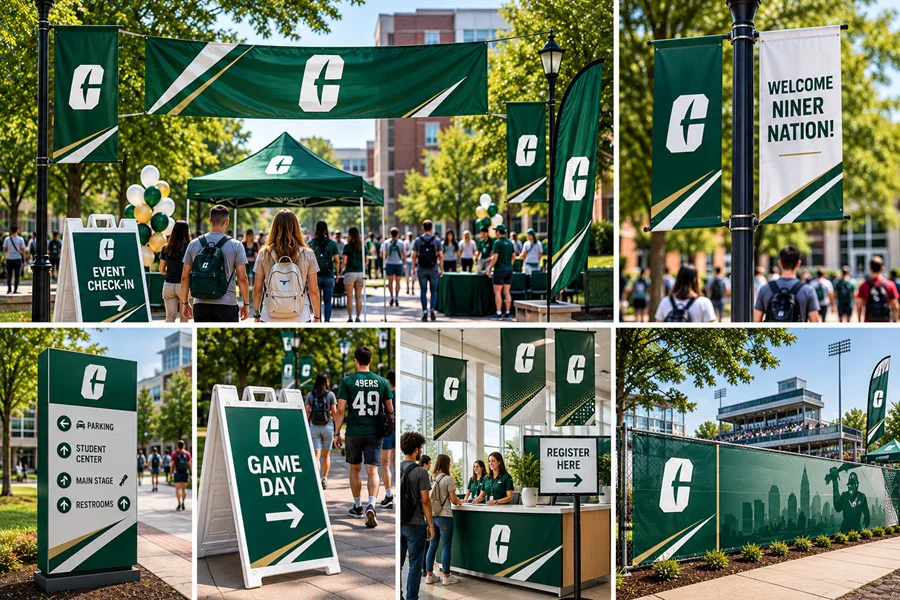
Temporary event signage helps universities communicate important information before, during, and after campus events. From orientation week and graduation ceremonies to athletic competitions, conferences, career fairs, and alumni reunions, temporary signs guide visitors, reinforce campus branding, improve safety, and keep events organized.
Unlike permanent campus signage, temporary event signage is designed for short-term use while remaining durable enough to withstand weather, heavy foot traffic, and frequent installation and removal. Selecting the right materials, placement, and messaging ensures visitors receive clear information without creating unnecessary waste or confusion.
For colleges and universities throughout Charlotte, North Carolina, and across the country, well-planned temporary signage is an important part of successful event management.
What Is Temporary Event Signage?
Temporary event signage includes signs and graphics installed for a limited period to support a specific event, season, or campus activity.
These signs are typically removed after the event concludes, although many institutions reuse them annually.
Common examples include:
- Event entrance signs
- Welcome banners
- Parking direction signs
- Pedestrian wayfinding
- Registration signs
- Building identification overlays
- Sponsor recognition signs
- Pole banners
- Retractable banner stands
- A-frame sidewalk signs
- Fence mesh banners
- Window graphics
- Floor graphics
- Tent graphics
- Stage backdrops
- Safety and crowd management signage
Each serves a different purpose, and choosing the appropriate type depends on the event’s size, duration, and location.
Why Temporary Event Signage Matters
Universities often welcome thousands of visitors who are unfamiliar with the campus.
These visitors may include:
- Prospective students
- Parents
- Alumni
- Athletic fans
- Conference attendees
- Vendors
- Guest speakers
- Community members
Without clear temporary signage, visitors can easily become lost, park in incorrect areas, miss scheduled activities, or create unnecessary congestion.
Effective temporary signage helps events run more efficiently while reducing stress for both attendees and campus staff.
Common University Events That Require Temporary Signage
Nearly every campus hosts events that benefit from temporary signage.
Examples include:
- Student orientation
- Graduation ceremonies
- Move-in and move-out days
- Homecoming
- Athletic tournaments
- Career fairs
- Academic conferences
- Campus tours
- Open houses
- Fundraising events
- Alumni weekends
- Performing arts events
- Guest lectures
- Community outreach programs
Many universities create reusable signage systems that can be adapted for multiple events throughout the year.
Types of Temporary Event Signage
Outdoor Banners
Vinyl banners remain one of the most versatile event signage options.
They work well for:
- Event entrances
- Building exteriors
- Fences
- Athletic facilities
- Parking lots
Advantages:
- Large viewing area
- Easy installation
- Weather resistant
- Cost-effective for seasonal use
Limitations:
Long-term outdoor exposure may cause fading, particularly if banners are reused for several years.
Retractable Banner Stands
Retractable displays are commonly used indoors for:
- Registration
- Welcome areas
- Speaker introductions
- Department exhibits
- Recruiting events
Advantages include:
- Portable
- Quick setup
- Professional appearance
- Compact storage
Because they are intended for indoor use, they are generally not suitable for windy outdoor environments.
A-Frame Signs
A-frame signs provide flexible wayfinding around campus.
Common applications include:
- Parking directions
- Event entrances
- Building entrances
- Schedule updates
- Food vendor locations
Their portability allows staff to adjust locations throughout the day as traffic patterns change.
Yard Signs
Corrugated plastic yard signs are frequently used for:
- Parking guidance
- Vehicle routing
- Shuttle stops
- Overflow parking
- Temporary road closures
These signs are inexpensive and simple to install but are intended for short-term use.
Floor Graphics
Floor graphics help direct pedestrian traffic inside buildings.
Common locations include:
- Student centers
- Gymnasiums
- Libraries
- Conference facilities
- Ballrooms
Proper floor graphics reduce congestion while guiding visitors naturally through large spaces.
Window Graphics
Temporary window graphics provide branding without permanently changing a building.
Applications include:
- Event branding
- Welcome messaging
- Department promotions
- Privacy during events
Removable vinyl makes seasonal updates straightforward.
Choosing the Right Materials
Material selection should match the expected lifespan of the event.
Vinyl
Suitable for:
- Outdoor banners
- Fence graphics
- Stage backdrops
Benefits include weather resistance and the ability to produce large-format graphics.
Corrugated Plastic (Coroplast)
Ideal for:
- Yard signs
- Parking signs
- Temporary directional signs
Advantages include:
- Lightweight
- Affordable
- Easy to install
Tradeoff:
Less durable than aluminum for repeated long-term use.
Foam Board
Common for indoor events such as:
- Registration
- Sponsor recognition
- Presentations
Foam board provides a clean appearance but is easily damaged by moisture.
PVC Panels
Used when signs need greater durability.
Suitable for:
- Reusable directional signs
- Event information
- Department identification
PVC withstands repeated handling better than foam board.
Fabric Graphics
Fabric displays are increasingly used for:
- Stage backdrops
- Photo opportunities
- Trade show displays
- Alumni events
Advantages include wrinkle resistance, portability, and reduced glare under event lighting.
Design Considerations
Keep Information Brief
Visitors should understand a sign within a few seconds.
Focus on:
- Destination
- Direction
- Time
- Building name
- Event name
Avoid unnecessary paragraphs.
Maintain Brand Consistency
Temporary signs should match the university’s visual identity.
Consistency includes:
- Colors
- Typography
- Logos
- Graphic styles
This reinforces campus branding while making signs easier to recognize.
Consider Viewing Distance
Signs should be designed based on where viewers will read them.
For example:
- Parking signs require larger lettering than lobby displays.
- Building entrances need greater visibility than registration counters.
Designing for the expected viewing distance improves readability.
Account for Traffic Flow
Pedestrian and vehicle traffic move differently.
Successful event signage considers:
- Walking paths
- Vehicle entrances
- Parking lots
- Accessible routes
- Shuttle stops
Signs should appear before visitors need to make decisions—not after.
Common Mistakes to Avoid
Installing Too Few Signs
Visitors often miss the first directional sign.
Providing reassurance signs along the route helps confirm they are heading in the right direction.
Using Small Text Outdoors
Large outdoor spaces require significantly larger lettering than indoor environments.
Small text may be readable up close but ineffective from a moving vehicle.
Waiting Until the Last Minute
Event signage often requires:
- Graphic design
- Proof approval
- Printing
- Finishing
- Installation planning
Starting early reduces the likelihood of rushed decisions and production delays.
Ignoring Weather Conditions
Outdoor events should anticipate:
- Wind
- Rain
- Heat
- Direct sunlight
Choosing appropriate hardware and materials helps prevent damaged or unsafe installations.
Forgetting ADA Considerations
Temporary signage should not obstruct accessible pathways.
When temporary directional signs supplement permanent ADA signage, they should support—not replace—accessible navigation.
Maintenance and Storage
Many universities reuse temporary signs annually.
- Proper storage extends their lifespan.
- Recommended practices include:
- Clean graphics before storage.
- Store banners rolled rather than folded.
- Keep retractable displays in protective cases.
- Label hardware for faster installation next year.
- Inspect graphics before reuse.
Routine maintenance reduces replacement costs over time.
Temporary Event Signage in Charlotte
Charlotte is home to colleges, universities, healthcare education centers, and technical schools that host a wide variety of public and private events throughout the year. From student orientation and commencement ceremonies to athletic competitions and community festivals, temporary signage helps visitors navigate campuses efficiently while maintaining a consistent institutional identity.
Universities located near busy urban corridors or mixed-use developments often benefit from well-planned parking guidance, pedestrian wayfinding, and event identification that integrates with their existing campus signage standards.
Frequently Asked Questions
How long does temporary event signage typically last?
Most temporary signage is designed for days, weeks, or a single season. With proper storage, many banners, retractable displays, and PVC signs can be reused for multiple annual events.
What is the most common material for outdoor event banners?
Vinyl is commonly used because it balances durability, weather resistance, print quality, and cost.
Can temporary signage match permanent campus branding?
Yes. Temporary signs should follow the university’s established branding guidelines, including colors, fonts, logos, and graphic standards, to create a consistent visitor experience.
Are retractable banners suitable for outdoor use?
Generally, no. Most retractable banner stands are intended for indoor environments where they are protected from wind and weather.
What signs are most important during graduation?
Graduation events typically require parking signs, pedestrian wayfinding, registration signage, seating identification, accessible route signs, and welcome banners to help manage large crowds efficiently.
Should universities invest in reusable event signage?
For recurring events such as orientation, commencement, and annual conferences, reusable signage can reduce long-term costs and simplify event preparation, provided the event branding remains consistent from year to year.

