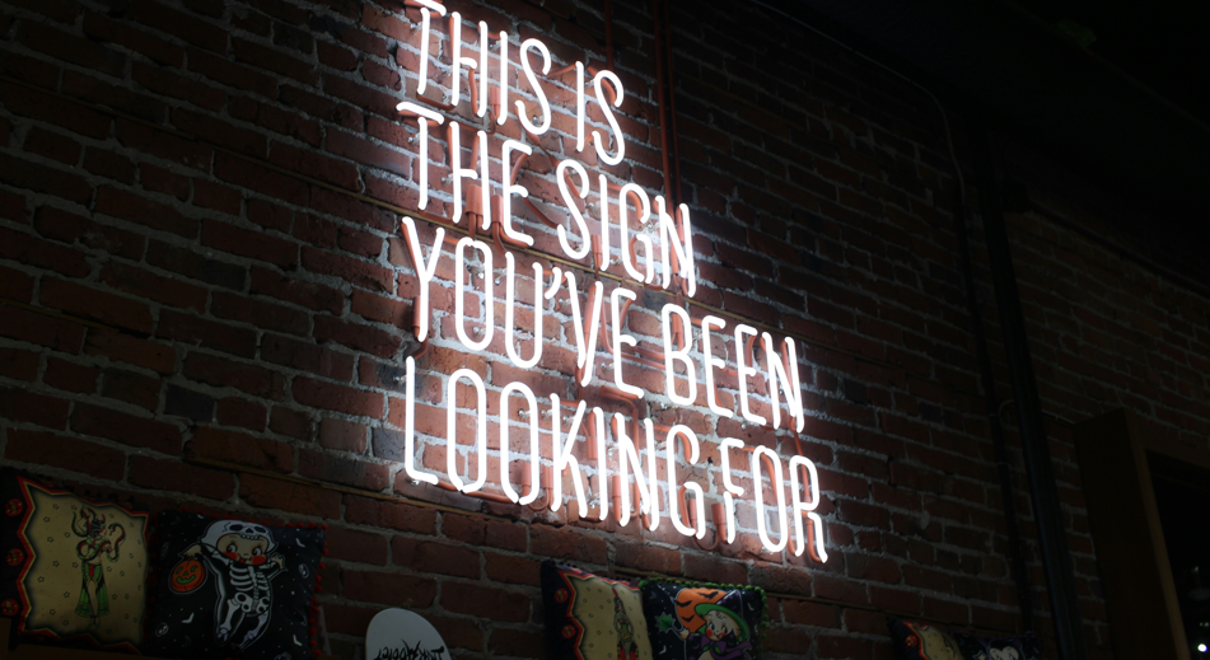
2026 will be the year of experience-first design. In an article on experiential design featuring Abraham Burickson, he shared that experience design “is the practice of making the human experience the product of the design practice.”
In our industry, this means moving beyond the physical substrate. It’s no longer just about the aluminum, the LEDs or the vinyl; it’s about the feeling a customer has when they find their way easily through a complex school campus or the excitement they feel inside a retail space with perfectly integrated digital displays and creative static visuals.
Instead of just merely following signage trends, we’re featuring methods to solve business challenges in the wild. From refining what we provide to getting even more efficient with the tools at our fingertips, this is a year where enhanced technology meets humanity through craftsmanship. Whether you’re in the business of sign design, business or installation, here are a handful of trends to keep you ahead of the game and laser-focused on having an experience-first approach in 2026.
Trend #1: Texture, Dimensionality and Customization: The "Feel" of Your Brand
Moving away from polished perfection, there’s an increased interest in designs that incorporate hand-sketched elements, bold typography and nostalgic imagery to create a deeper emotional connection with the audience. The concept of personalization also extends to customized products. In Sparks & Honey research shared by Graphic Communications (and WhatTheyTh!nk), they predict that personalized items will be hitting $201 billion in 2026. Customized and branded products are another touchpoint for sign businesses to utilize this year.
Tactile signs themselves will also be communicating a bigger message this year. Anyone can print a flat vinyl sign, but in 2026, customers are asking for something more tactile — something that proves there is a human behind the brand. This movement toward textured signage and hand-drawn and dimensional printing emphasizes signage innovation and engages customers with a sense of place, where Direct-to-Object printing and RGB LED channel letters are changing the game.
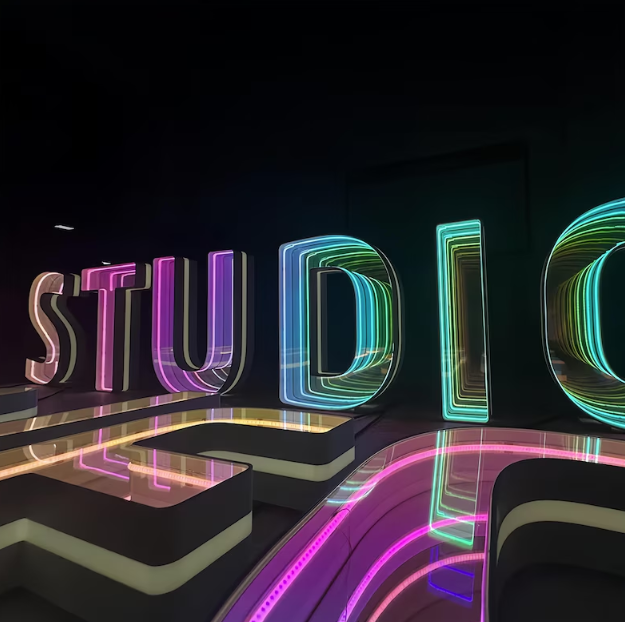
Dimensional letters and signage attract attention and draw consumers in.
One FASTSIGNS team recently installed custom poplar wood-grain lobby signs for various workout facilities to create a welcoming and high-end atmosphere for members. Those pieces weren’t just a focal point for the decor – they gave a nod to nature and human nature, and signified the opportunity to breathe life into a space that is breathing life into the human body.
.1).2).2602090721288.jpg)
FASTSIGNS constructed branded dimensional letters with natural elements overlaid as a focal point for Discover Strength locations.
Texture printing itself isn’t just about basic wood or ink layering, it creates a type of cognitive connection. When a sign has physical depth – like 3D resin-embedded RGB LED letters — it doesn’t just look better; it survives the "sidewalk test." Standard flat signs often get lost in the visual noise of a busy street, but eye-catching shadow projection signage or dimensional letters catch the sun at different angles throughout the day.
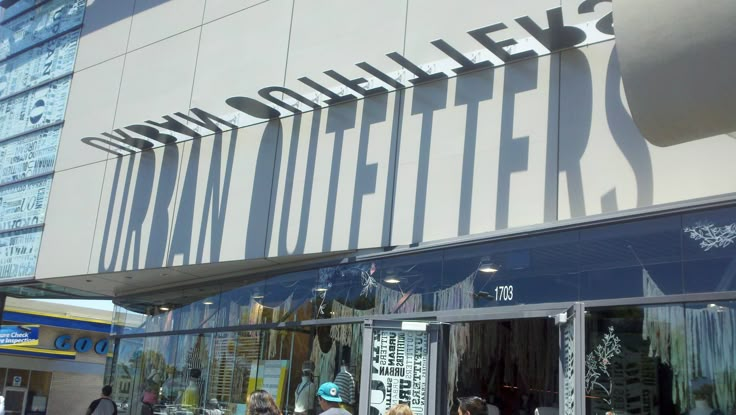
Utilize light-based signage to cast a visual that not only communicates but also sets a tone for your space.
The placement of these letters matters as much as the technology inside them. If you don't account for the specific "glare hour" of your west-facing window, even the most expensive RGB LEDs will look washed out. While projection signage looks incredible in a mock-up, in the field, installers have to account for ambient street lighting to make sure projected logos don’t disappear at night. With first-hand insight, FASTSIGNS’ fabrication teams consider these things for projection signage before they even hit print.
Beyond just looking high-end, tactile and dimensional signs create a sense of 'place' that helps customers feel more emotionally connected to your brand in an increasingly digital world.
Trend #2: The Ascent of AI-Powered and Interactive Digital Signage
This year will also see a swing from static displays into engaging communication hubs, a more fully dynamic content model driven by two forces: live data and AI signage. Systems are using AI to analyze real-time updates to create hyper-personalized and relevant content to boost engagement — for example, automatically promoting umbrellas when it rains or removing menu items when inventory runs low. Simultaneously, Generative AI tools are solving the “stale content” problem by allowing teams to create high-quality, localized assets in seconds. Together, these technologies transform signage into an intelligent part of business operations.
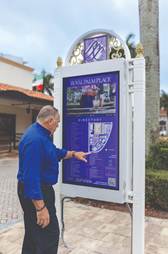
Marketers can now create an immersive experience with data-driven signage that drives engagement.
When one FASTSIGNS team installed two digital screens and 12 cutting-edge outdoor directories for better navigation at an upscale retail and dining destination, viewers felt the impact. One customer noted that digital signage was a gamechanger, revolutionizing the way information is conveyed and contributing to the overall success of the property. Immersive displays not only provided wayfinding solutions, but also maximum attention-grabbing impact.
While AI offers forward-focused technology, a sign provider layers that with wisdom to create an experience that will support and engage a consumer. In this era of synergy, marketers and sign creators will work closely together to create hyper-personalized content using real-time data and touchless interactions. By using AI-driven systems to serve relevant, real-time information, you’re showing your customers that you understand their immediate needs and value their time.
Trend #3: The Call of Sustainability
Eco-friendly solutions are still an important consideration. In 2026, eco solutions in signage are not just something that’s nice to have – they’re a requirement. With stringent ESG (Environmental, Social and Governance) goals, companies are having to keep a close eye on the power consumption of their networks. Hardware with a lower energy footprint will likely become a standard line item in future projects.
The industry is shifting toward a full PVC-free signage lifecycle, prioritizing re-pulpable and biodegradable materials like recycled aluminum, responsibly sourced wood and recycled plastics. This sustainable push extends to production, too, with a move toward water-and plant-based inks on eco-friendly substrates. Through these methods, the focus has shifted from temporary signs to sustainable craftsmanship.
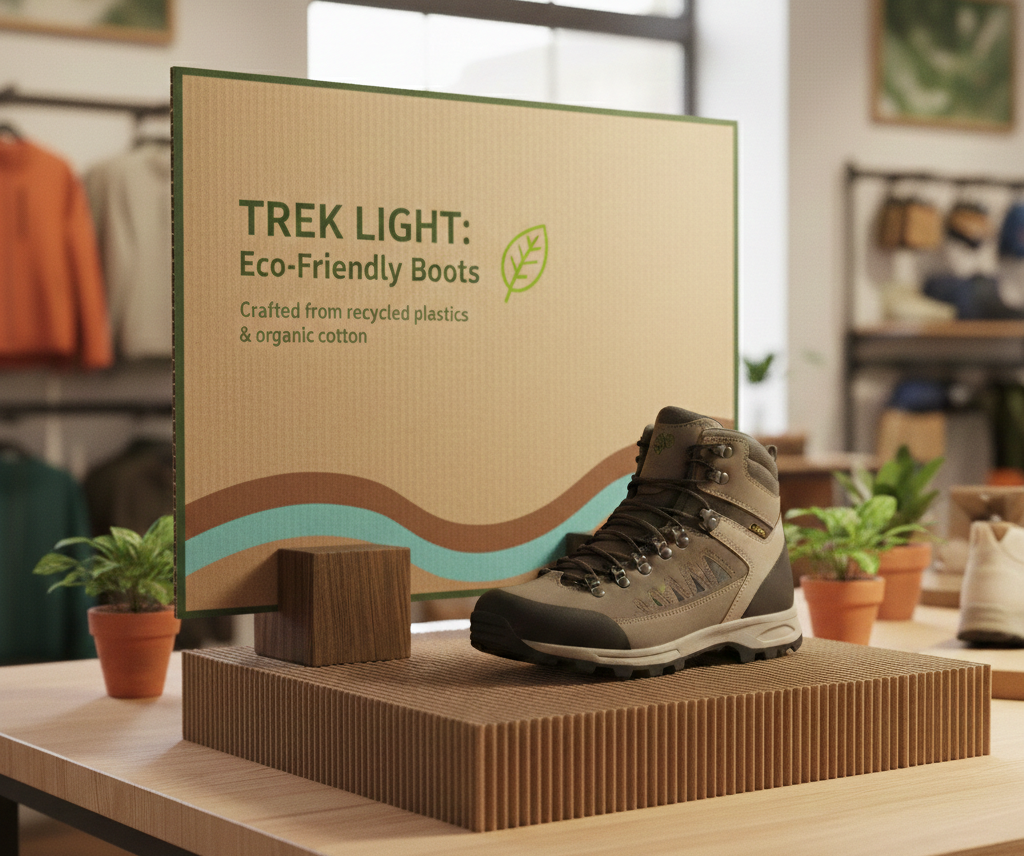
Eco-friendly signs and corrugated signage have seen great adoption across a variety of industries.
While things like LED lighting and green signage solutions are growing in popularity for energy efficiency and lower costs, modular signage design is another trend we’re seeing. Modular design refers to the components of a sign, such as lighting, panels and frames, that can be easily disassembled, repaired or replaced, extending the product lifecycle and reducing waste. This durable option is both cheaper and simpler to switch out as a panel instead of a full monument sign replacement.
Overall, choosing eco-friendly materials and modular designs does more than lower your carbon footprint; it gives your customers the ability to feel good about supporting a business that shares their environmental values.
Trend #4: The Advantage of an All-In-One Signage Partner
Smart sign manufacturers are now utilizing AI to help them increase production and the speed at which they can send quotes, while also lowering costs through internal optimization. Agentic AI can also assist sign builders with staying ahead of their competition by improving their supply chains and production processes.
Sign experts are focused on streamlining their processes, bringing more production in-house, and ensuring better coordination between sales, design and fabrication to improve their services for clients. While investing in smart manufacturing and automation can improve efficiency and output, the value of having an all-in-one partner for your visual communication needs is priceless. With this option, you have real people who are keeping an eye on things like design formatting, misspellings or any other details that AI might not catch.
You can relax knowing that you don't have to coordinate between a designer, a printer and an installer. Handing your project to a single, expert partner replaces the project management headache with peace of mind, allowing you to focus on your business while they handle the friction of execution.
.jpeg)
A trusted sign partner can walk you through every step of the sign project journey.
Bring These Trends to Life in 2026
As we look toward the landscape of 2026, the line between the digital and physical worlds continues to blur. But as these trends show, the most successful providers won't just be the ones with the newest printers or the fastest software — they will be the ones who use those tools to craft intentional moments. Whether you are seeking an effective wayfinding system or installing a high-tech immersive lobby, remember that this work is the "material" for the customer’s journey. By staying ahead of these shifts in 2026 with a partner like FASTSIGNS, you're building the infrastructure for a better human experience for yourself and your consumers, from the first sketch to the final bolt.