Key Takeaways:
Acrylic signs provide vibrant colors and modern aesthetics, making them ideal for indoor branding and spaces where visual impact is crucial.
Metal signs provide superior durability, weather resistance and a premium look, making them the preferred choice for exterior applications and long-term value.
The right signage material depends on your business environment, brand goals and budget; partnering with FASTSIGNS ensures expert guidance and a tailored solution for your needs.
Your storefront signage creates the first impression that either draws customers in or sends them walking past. When choosing between acrylic signs and metal signs, you're shaping how your brand feels to potential customers.
Acrylic delivers a sleek, modern polish, perfect for indoor spaces, while metal offers durability and a premium presence that stands up to weather and time. Knowing what story your brand tells, how much you want to invest upfront and how each material performs can help you make a confident decision.
What Are Acrylic Signs and Metal Signs?
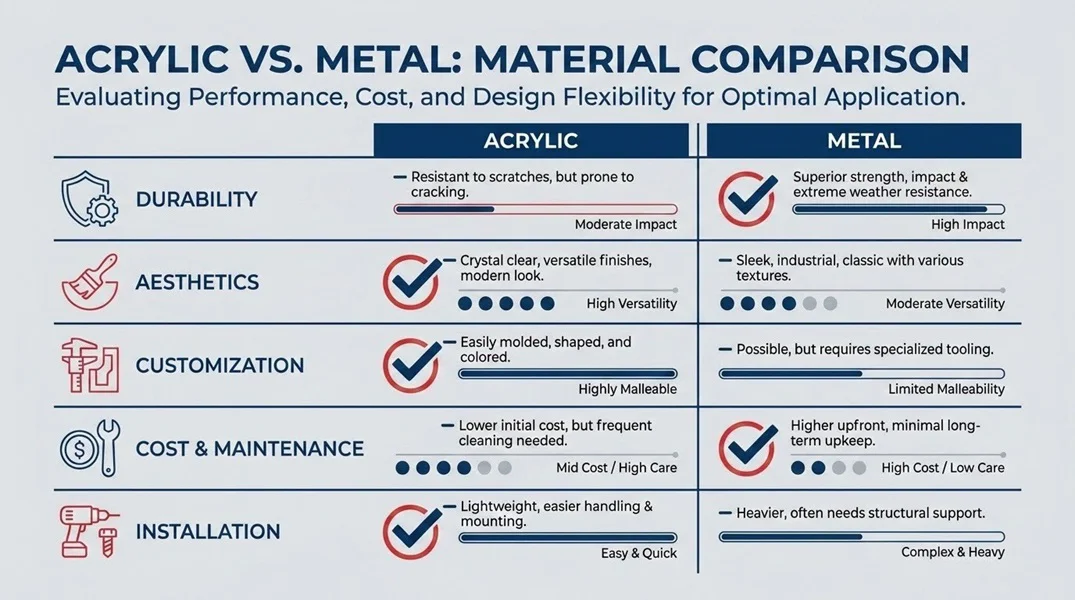
Both acrylic and metal signs offer precision fabrication through CNC routing and laser cutting, enabling dimensional lettering and custom shapes. They integrate smoothly with backlighting or edge lighting systems and mount using standoffs, flush mounts or raceway systems. Your choice between these materials depends on placement environment, desired finish and maintenance preferences rather than fabrication capabilities.
Acrylic Sign Materials
Acrylic signs use cast or extruded panels that deliver a glass-like finish with lightweight durability. These panels come in clear, frosted or colored options, making them well-suited for businesses wanting crisp, modern branding that stands out indoors.
Graphics can be applied through direct printing, vinyl application or dimensional standoffs, giving you flexibility in design execution. The material's superior color fidelity makes it ideal for displaying logos, photography and detailed graphics on reception walls, menu boards and class schedules.
Metal Sign Construction
Metal signs encompass several material choices, with aluminum being popular for its corrosion-resistant properties and structural stability. Stainless steel offers enhanced durability for high-end applications. These materials provide strong weather resistance, making them suitable for exterior facades and challenging environments.
Finishes range from brushed and satin textures to powder-coated colors. This creates a refined industrial look that communicates permanence and quality for outdoor branding and rugged interior applications.
Quick Material Comparison
When choosing between acrylic and metal signs, these key factors help you make the right decision for your business: acrylic signs deliver polished indoor impact with vibrant colors, while metal signs provide rugged outdoor performance with premium appeal. The right choice supports your brand vision while fitting your space and growth timeline.
At a Glance: Acrylic vs Metal Signs
Factor | Acrylic Signs | Metal Signs |
|---|
Best For | Indoor spaces, reception walls and menu boards | Exterior facades, parking signs, wayfinding |
Weather Resistance | Good indoors; needs UV protection outdoors | Excellent all-weather durability |
UV Resistance | Good with UV-stable inks and laminates | Excellent with weather-resistant finishes |
Impact Resistance | Moderate; prone to edge chipping | High, especially aluminum and steel |
Scratch Resistance | Lower; requires careful cleaning | Higher; maintains finish longer |
Temperature Tolerance | Can warp in extreme heat | Stable across wide temperature ranges |
Finish Options | High-gloss, frosted, clear, colored | Brushed, satin, powder-coated, anodized |
Color Vibrancy | Excellent; backlit compatible | Good with quality printing; halo-lit effects |
Lighting Integration | Edge-lit and backlit panels | 3D halo and accent lighting |
Brand Personality | Modern, energetic, approachable | Premium, established, authoritative |
Cutting & Fabrication | Laser-cut edges, fine detail work | CNC routed, raised letter cutting |
Weight & Installation | Lightweight; easy mounting | Heavier; requires secure anchoring |
Initial Cost | Lower for most applications | Higher upfront investment |
Lifecycle Value | Good for indoor and short-term outdoor use | Better for long-term outdoor exposure |
Lead Times | Faster production and installation | Longer for specialized finishes and electrical work |
Breaking Down What Matters Most
When comparing acrylic signs vs metal signs, the right choice depends on your sign's location, how you want your brand to feel and what fits your timeline and budget. We'll examine five key areas: weather performance, visual impact, design options, cost considerations and installation requirements that affect your business operations.
Weather and Durability
Both materials handle moisture well. The difference shows up over time outdoors. Metal, especially aluminum and stainless steel, holds its finish through years of sun, wind and temperature swings. Acrylic resists water but can scratch more easily and may yellow without UV protection. Research confirms that prolonged UV exposure can alter acrylic's surface properties, which affects both how it looks and how often it needs maintenance.
For anything outdoors, metal is the safer long-term bet.
Visual Impact
Acrylic delivers a polished, glass-like finish with excellent color reproduction. It works especially well for edge-lit and backlit installations, which is why you see it in fitness studios, wellness spaces and modern retail environments. Metal signs communicate a different kind of quality. Brushed and powder-coated finishes add depth and texture that reads as established and authoritative, particularly on building exteriors.
If your brand is modern and energetic, acrylic tends to feel more at home. If it's premium and traditional, metal usually hits the right note.
Design and Fabrication
Both materials support precision fabrication through CNC routing and laser cutting. Acrylic handles intricate shapes, layered graphics and detailed photography well. Metal is better for bold dimensional lettering, raised letters and larger architectural installations. They both integrate with standoff mounts, flush mounts and raceway systems, so mounting options aren't usually the deciding factor.
Cost and Maintenance
Acrylic usually has a lower upfront cost. It also cleans easily with a non-abrasive cleaner and a soft cloth. Metal costs more initially, but protective finishes like powder coating and anodizing can significantly reduce replacement needs in harsh conditions. For outdoor signage, metal often works out to better value over time. For indoor signage where durability isn't a concern, acrylic is usually the more budget-friendly choice.
Installation
Acrylic is lightweight and straightforward to mount, which means faster turnaround and less installation complexity. Metal can be heavier and may require secure anchoring, structural coordination or electrical work for illuminated options. If you're on a tight timeline, acrylic usually gets there faster. Metal takes longer for specialized finishes, but it is built to stay put for years once it's up.
A Few Things to Sort Out Before You Decide
Choosing the right material begins with understanding your specific needs and priorities. Your location, brand goals and project requirements create a framework that guides your decision. When you choose between acrylic and metal signs, these key factors help you find the perfect match for your business needs.
Environmental exposure and weather conditions: For outdoor settings that face sun, rain and fluctuating temperatures, metal with protective coatings tends to hold up best. Acrylic shines in indoor environments, where its color clarity and polished, glass-like finish can really stand out.
Brand personality and customer experience: The look and feel of your signage can subtly shape perception — acrylic leans clean and contemporary, making it a natural fit for modern, high-energy brands. Metal, by comparison, brings a sense of permanence and credibility that established businesses often gravitate toward.
Project timeline and fabrication requirements: When timing is tight, acrylic is typically easier to produce and install on a shorter schedule. Metal projects require a bit more planning, especially when custom finishes or electrical components come into play.
Building regulations and structural requirements: Verify wind load limits and permit processes early, especially for exterior installations that may need specialized anchoring.
Maintenance preferences and lifecycle planning: Consider cleaning frequency, replacement schedules and durability needs based on your specific material choice and location.
The right partner makes these decisions clearer and faster.
How FASTSIGNS Helps You Get It Right
Choosing between materials is one decision. Getting the design, fabrication, permits and installation right is a whole other set of decisions. FASTSIGNS handles all of it.
Here's how we make the difference:
End-to-end project guidance: From site surveys to final installation, we handle permits, ADA compliance and material recommendations so you can focus on your business
Proven production quality: UV-stable inks, precision routing and powder-coated finishes ensure your investment looks great and lasts longer
Flexible support that scales: Whether you need one reception sign or a complete rebrand across multiple locations, we adapt our services to match your pace and budget
Transparent communication: Clear timelines, regular updates and honest guidance from estimate through installation
With more than 40 years of experience, FASTSIGNS is trusted by thousands of businesses nationwide. Our comprehensive project management approach means projects finish on schedule, giving you the reliability to plan your grand opening or rebrand with confidence.
Acrylic Signs vs Metal Signs: Frequently Asked Questions (FAQs)
Still on the fence? These are the questions most business owners ask before they commit to a material.
Which material holds up better outdoors over time?
For year-round outdoor exposure, metal signs typically outlast acrylic with superior resistance to warping and UV damage. While acrylic can work outdoors with proper UV-stabilized inks and laminates, metal finishes like powder coating and anodizing provide longer-lasting protection against weather extremes.
How do upfront costs compare to long-term value?
Acrylic signs often cost less initially and clean easily with gentle, non-abrasive products. While metal might require a larger initial investment, protective finishes like powder coating and anodizing can greatly reduce the need for replacements in harsh climates. Over time, this makes metal a more cost-effective option for outdoor applications.
Which material offers better design flexibility and lighting options?
Acrylic excels at crisp laser-cut edges, layered graphics and smooth edge-lit or backlit effects that enhance logo visibility and impact. Metal shines for dimensional letters, halo lighting and architectural textures that convey permanence and craft.
When should I choose acrylic vs metal for different parts of my business?
Choose acrylic for interior feature walls, reception areas and menu boards where color accuracy and modern aesthetics matter most. Select metal for exterior facades, parking signs and wayfinding where durability and weather resistance are priorities.
How quickly can I get my signs installed?
Acrylic typically has shorter lead times due to streamlined fabrication, while metal may take longer for specialized finishes and electrical work. Your local FASTSIGNS team can provide accurate timelines based on your specific design and installation requirements.
Make Your Brand Shine
The choice between acrylic and metal comes down to where your signs will live and what story you want to tell. Acrylic signs deliver that polished, modern look perfect for studios and retail spaces, while metal signs bring lasting durability and premium appeal to exteriors. Many successful businesses use both materials strategically across different locations.
When you're ready to move forward, your next step is simple: share photos of your space, your brand guidelines and your timeline goals. We'll create a material and mounting plan that matches your lighting, foot traffic and maintenance preferences. With proven material quality and local expertise, you can move forward confidently knowing your branded business signs will perform beautifully for years.
Ready to see your vision come to life? Explore Custom Signs and Graphics to get started with a tailored quote and timeline that fits your growth plans.