Construction Site Safety Signage: What You Need, Where It Goes and Why It Matters
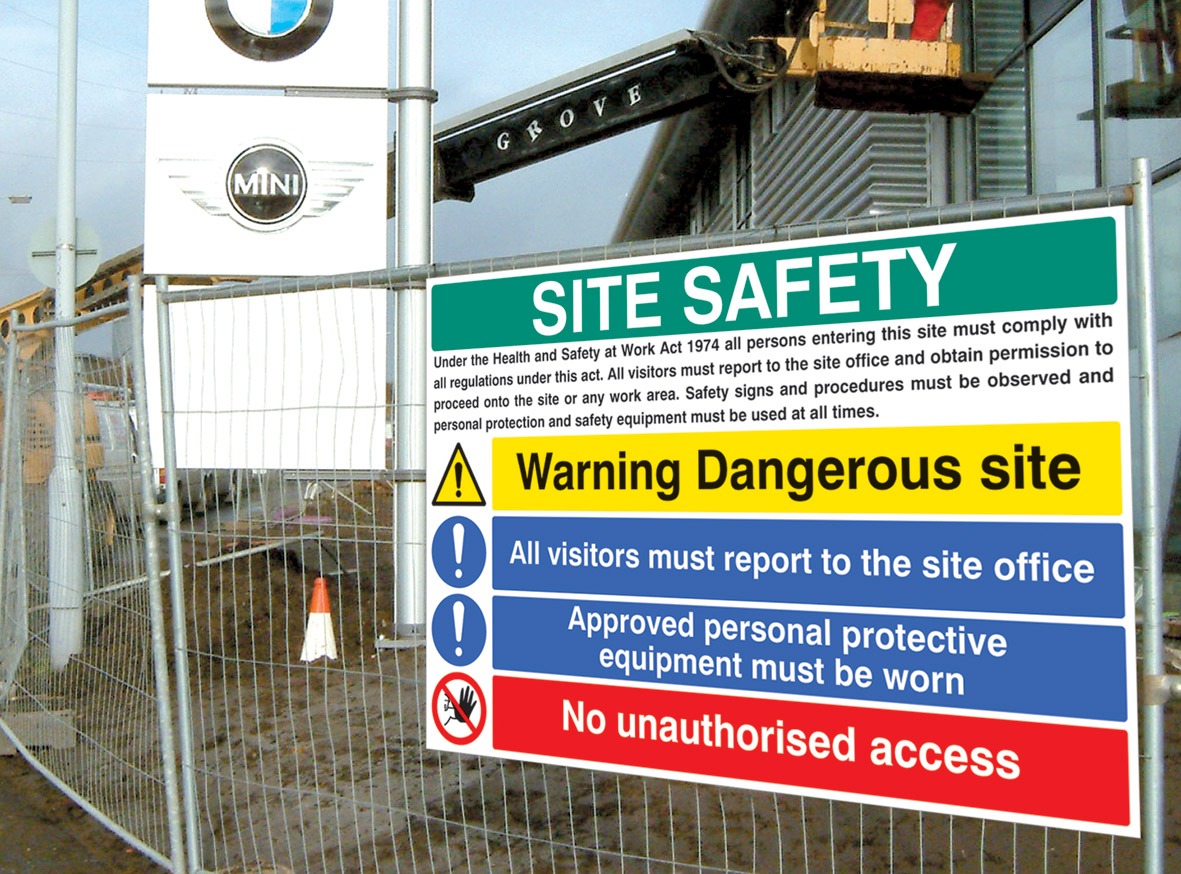
Key Takeaways:
OSHA 29 CFR 1926.200 establishes the minimum signal word, color and placement standards every construction site sign must meet.
Effective construction site signage combines regulatory required signs with hazard-specific warning, PPE and traffic control signs positioned at decision points before workers or visitors encounter the risk.
Substrate and material choice is as important as message content on active job sites, where signs face UV exposure, vibration, mud, chemical contact and repeated handling across the project lifecycle.
Construction sites pose a higher risk than almost any other work environment. The Bureau of Labor Statistics consistently ranks construction among the industries with the highest rate of fatal work injuries in the United States. The right safety sign in the right place does not just satisfy a compliance checkbox. It is the fastest, most reliable way to communicate a hazard to someone who has never been on that specific site before.
This guide covers every major construction sign category, the federal standards behind them, material decisions that hold up on active job sites and a reference checklist your team can use before breaking ground. FASTSIGNS provides custom construction safety signage built to OSHA specifications, with fast turnaround and local experts who understand job site environments. Find a location near you or request a quote.
The Four OSHA Signal Word Categories: Know Before You Order
Before selecting any individual sign, every contractor needs to understand the OSHA 29 CFR 1926.200 signal word hierarchy. Federal construction standards specify which color, which signal word and which level of hazard communication applies to each category. Using the wrong signal word on a sign is not just a design error; it is a compliance violation.
The four categories break down as follows:
DANGER (Red, black and white): Indicates an immediately life-threatening hazard. Reserved for situations where death or serious injury is almost certain if the hazard is not avoided. Examples include unguarded excavation edges, live electrical panels and areas with active overhead work. This is the highest severity level and should not be used casually.
WARNING (Orange and black): Indicates a serious hazard that could cause death or serious injury if the hazard is not avoided. Used where the risk is significant but not immediately certain. Examples include heavy equipment operating areas, fall hazards at elevation and confined space entries.
CAUTION (Yellow and black): Indicates a potentially hazardous situation that may result in minor or moderate injury. Used for tripping hazards, wet surfaces, moving machinery proximity warnings and other moderate-risk conditions. Do not use CAUTION where the appropriate signal word is WARNING or DANGER.
NOTICE (Blue and white): Not a safety warning. Used to communicate general information, required procedures or instructions that are not related to personal injury hazard. Examples include visitor check-in requirements, PPE stations, site access instructions and tool storage rules.
This four-tier structure follows ANSI Z535 standards, which align closely with OSHA requirements and serve as the design framework for compliant safety signage across industries.
1. DANGER Signs: Reserve These for Real Emergencies
DANGER signs are the highest-urgency communication tool on a job site and should be treated that way. Overuse makes them lose impact. When workers see a DANGER sign on every corner of a site, the signal word stops registering as a genuine warning.
Post DANGER signs at excavation edges deeper than four feet, near unguarded power sources and wherever overhead lifting or crane operations are underway. Position them at the decision point, not after the hazard. A sign that someone reads after stepping into a risk zone is a compliance document, not a safety tool.
Laminated aluminum or rigid PVC panels: Hold color and legibility after extended exposure to sun, rain and site dust
Anti-graffiti coatings: Prevent unauthorized marking that obscures the message on long-duration projects
Mounting height: OSHA generally requires signage to be posted at eye level, between five and seven feet from grade, for standing workers
Bilingual text where applicable: Many construction workforces include workers whose primary language is Spanish; bilingual DANGER signs are a best practice and in some states a requirement
2. Warning Signs: High-Hazard Areas Outside the Immediate DANGER Zone
Warning signs cover the significant-risk conditions that are not quite at the DANGER threshold but still carry real potential for serious injury. These are among the most commonly required signs on active commercial and residential construction sites.
Typical Warning sign applications include the perimeter of heavy equipment operating zones, elevated work platforms with open edges, areas below active overhead work and any location where workers from different trades converge and may be unfamiliar with current hazards. Keep placement consistent. A Warning sign that appears in one format at the south end of a site and a different format at the north end creates visual confusion that slows comprehension.
Custom construction warning signs can be produced with project-specific information, contractor logos and bilingual text without sacrificing the standardized color coding and signal word placement that OSHA requires.
3. Caution Signs: Cover the Moderate-Risk Conditions That Accumulate into Incidents
Most job site injuries do not come from the most dramatic hazards. They come from the everyday moderate-risk conditions that accumulate on busy sites: slippery mud near a material staging area, a temporary step up at a transition between floors and tools or materials stored in a high-traffic corridor.
Caution signs belong at every one of these locations. The lower severity level does not mean lower posting frequency. If anything, the sheer volume of moderate-risk conditions on a typical site means Caution signs should make up the largest single category in your sign inventory.
Temporary adhesive-backed caution labels: Work well for short-duration indoor hazards and can be repositioned as conditions change
Folding caution sign stands: Allow quick repositioning throughout the workday as wet concrete, fresh paint or active machinery locations shift
High-contrast yellow film on glass surfaces: Marks temporary conditions for enclosed or partially enclosed structures under renovation
4. NOTICE Signs: Site Rules, Procedures and Access Control
NOTICE signs handle all the non-hazard communication that keeps a site organized and compliant. Visitor check-in procedures, PPE requirements at site entry, no-smoking policies, material drop zone assignments, parking restrictions and contractor ID requirements all belong on NOTICE signs.
These signs carry no injury implication, which is precisely why their placement and maintenance matter. A faded, hand-written NOTICE sign signals to visitors, inspectors and your own workforce that site management is not detail-oriented. Clean, professionally produced NOTICE signs reinforce that your operation runs to a standard.
Post NOTICE signs at every site entry point, at the project management office, at material laydown areas and at any transition between public property and active work zones. Entry-point NOTICE signs should be among the first things installed before any other work begins on site.
5. PPE Reminder Signs: Enforce Your Safety Program Passively
PPE non-compliance is one of the most frequently cited OSHA violations in construction, and it rarely happens because workers lack the equipment. It happens because the expectation was not clearly communicated at the point where the behavior needs to occur.
PPE reminder signs work because they deliver that expectation at precisely the right moment: at the gate, at the top of a stair, at the entrance to a specific hazard zone. Workers who are heading into a zone that requires a hard hat are far more likely to reach for one if a sign at that threshold reminds them. Construction site safety signs designed for PPE communication should use clear iconography alongside text, especially on sites with multilingual workforces, so the message transfers without requiring a worker to stop and read.
Common PPE reminder applications include:
Hard hat required at every site access point and overhead hazard zone
High-visibility vest required at all vehicular and pedestrian mixed-use areas
Safety glasses and gloves required at tool staging areas, cutting zones and chemical storage
Fall protection required at any elevated work area above six feet
Hearing protection required in areas with sustained noise above 85 dBA
6. Temporary Traffic Control Signs: Protect Workers and the Public
When construction operations extend into or adjacent to public roads, temporary traffic control (TTC) signage becomes a regulatory requirement under the Manual on Uniform Traffic Control Devices (MUTCD). These are not optional additions to a job site sign program. They are federally mandated elements of a traffic control plan.
Fluorescent orange is the standard background color for TTC signs in work zones. Common types include Road Work Ahead, Flagger Ahead, Lane Closed, One Lane Road and Speed Limit signs specific to the work zone. Retroreflective sheeting is required for any TTC sign that will be in place or visible during low-light or nighttime conditions.
The traffic control plan itself must be designed by a qualified person familiar with MUTCD standards. Signage must be installed in the correct sequence as drivers approach the work zone, with adequate spacing to allow reaction time at posted speeds.
7. Emergency and Evacuation Signs: The Signs That Matter Most When Things Go Wrong
Emergency signage is the category that matters most under the worst possible conditions, which means it also gets the least attention during routine site setup. First aid kit locations, fire extinguisher placement, eyewash station markers, assembly point signs and emergency exit routes need to be posted before work begins, not added as an afterthought.
On multi-story or multi-building construction projects, posted evacuation route maps need to account for the current state of the structure, not the completed building. Routes and exit points change as construction progresses. Assign a responsible party to review and update emergency signage as a standing part of your site safety inspection schedule.
Photoluminescent (glow-in-the-dark) materials for emergency exit markers and first aid signs improve visibility during power failure or smoke conditions and are required in certain occupancies and jurisdictions even during construction.
8. Wayfinding and Site Navigation Signs: Keep the Right People in the Right Places
Large construction projects routinely have dozens of subcontractors, inspectors, delivery drivers and client representatives moving through the site on any given day. Without clear directional signage, the wrong person ends up in the wrong place, which creates both safety exposure and operational delays.
Wayfinding signs for construction sites typically include: site entry and check-in point identification, directional arrows to specific work areas or building sections, parking assignments by trade or role, material delivery staging areas, material and waste separation instructions and restricted zone boundaries.
These signs do not need to be complex. Consistent color coding by zone or trade, clear arrow placement and large readable typography do the job. Post them at every major decision point, so someone who has never been on the site before would know which direction to go.
9. Hazardous Materials and Chemical Warning Signs: GHS Compliance on Site
Construction sites regularly involve hazardous chemicals, from concrete admixtures and solvents to adhesives and coatings. The Globally Harmonized System (GHS) of Classification and Labeling of Chemicals, enforced through OSHA's Hazard Communication Standard (HazCom 2012), requires specific label formats including signal words, pictograms and hazard statements on chemical containers.
Secondary container labels, chemical storage area signs and spill response station markers all fall under this requirement. Chemical storage areas also require posted Safety Data Sheet (SDS) accessibility notices so workers know where to find SDS information for every chemical in use on site. Keep GHS-compliant signs up to date as the chemical inventory on site changes between project phases.
10. Custom and Project-Specific Signs: Communicate What Standard Signs Cannot
Standard sign types cover most construction site communication needs, but every project has conditions, access restrictions and workflows that require custom messaging. Phased access restrictions, trade-specific work areas, numbered zones that correspond to project drawings, specific safety rule reminders from the general contractor and project milestone communications all need to be clearly posted.
Custom signs produced through FASTSIGNS can be turned around quickly as project conditions change. Durable substrates built for construction environments, including aluminum composite, coroplast and rigid PVC, hold up through weather, handling and repositioning without losing readability.
Construction Safety Sign Comparison Table
Sign Type | Signal Word / Color | Hazard Level | Typical Placement | Substrate Recommendation | Permit / Standard |
DANGER Signs | DANGER / Red-Black-White | Immediately life-threatening | Excavation edges, live electrical, crane zones | Aluminum or rigid PVC | OSHA 1926.200, ANSI Z535 |
Warning Signs | WARNING / Orange-Black | Serious injury risk | Heavy equipment zones, open edges, overhead work areas | Aluminum composite or laminated board | OSHA 1926.200, ANSI Z535 |
Caution Signs | CAUTION / Yellow-Black | Moderate injury risk | Slippery surfaces, tripping hazards, material staging | Coroplast, folding stands, adhesive labels | OSHA 1926.200, ANSI Z535 |
NOTICE Signs | NOTICE / Blue-White | No injury implication | Site entries, management office, laydown areas | Coroplast or aluminum composite | ANSI Z535 |
PPE Reminder Signs | REQUIRED/varies by type | Compliance enforcement | All site access points, zone transitions | Rigid PVC or aluminum | OSHA 1926.102/103 |
Temporary Traffic Control | None (fluorescent orange) | Public and worker safety | Road-adjacent work zones, lane closures | Retroreflective sheeting on aluminum | MUTCD (FHWA) |
Emergency and Evacuation | EXIT / First Aid / Assembly | Life safety | Site exits, first aid stations, assembly points | Photoluminescent or rigid PVC | OSHA 1926.150, local codes |
Wayfinding / Directional | None required | Site organization | Decision points, parking, zone transitions | Coroplast or aluminum composite | Site-specific |
Hazmat / GHS Chemical Signs | GHS pictograms + signal word | Chemical exposure risk | Chemical storage, secondary containers, spill stations | Vinyl labels or laminated panels | OSHA HazCom 2012 (GHS) |
Custom / Project-Specific | Varies | Project-specific | As needed per site conditions | Matches nearest hazard category substrate | Site-specific |
Construction Site Safety Sign Checklist
Use this checklist as a pre-mobilization guide and a phase-change review tool throughout the project. Work through each category before breaking ground, then revisit it every time site conditions, crew composition or active hazard zones change.
Pre-Construction and Site Setup
[ ] Site entry NOTICE sign posted at every access point (visitor check-in, PPE requirements, no-trespassing notice)
[ ] Project name, general contractor contact and emergency phone numbers posted at primary entry
[ ] Temporary fencing and hoarding labeled with DANGER or WARNING signs at intervals along the perimeter
[ ] Excavation DANGER signs posted at any planned dig area before groundbreaking
[ ] No Unauthorized Entry signs posted at all access points before site is active
OSHA Signal Word Signs
[ ] DANGER signs ordered for all immediately life-threatening hazard zones identified in the hazard assessment
[ ] WARNING signs ordered for all heavy equipment operating areas and elevated work locations
[ ] CAUTION signs ordered for all moderate-risk conditions including staging areas, pathways and material transitions
[ ] NOTICE signs ordered for all procedural and informational communication locations
[ ] All signs verified against OSHA 1926.200 signal word, color and format requirements
PPE Enforcement
[ ] Hard hat required sign at every site access point
[ ] High-visibility vest required sign at all pedestrian-vehicle conflict zones
[ ] Safety glasses and gloves required sign at tool staging and cutting areas
[ ] Hearing protection required sign at high-noise work areas
[ ] Fall protection required sign at any elevated work area above six feet
Temporary Traffic Control (if applicable)
[ ] Traffic control plan reviewed by qualified person and approved by local authority
[ ] Road Work Ahead signs placed at correct advance distance per MUTCD and posted speed
[ ] Flagger Ahead, Lane Closed and Speed Reduction signs in correct sequence
[ ] All TTC signs use retroreflective sheeting rated for nighttime visibility if any nighttime work planned
Emergency and Evacuation
[ ] First aid station location sign posted and visible from all major work areas
[ ] Fire extinguisher location signs posted at all units
[ ] Eyewash station location sign posted where chemical exposure risk exists
[ ] Site assembly point sign posted and communicated to all workers at site orientation
[ ] Emergency evacuation route map posted in site management office and major access points
[ ] Emergency contacts (site supervisor, nearest hospital, poison control) posted at site entry
Hazardous Materials (if applicable)
[ ] GHS-compliant labels on all chemical containers including secondary containers
[ ] Chemical storage area identified with appropriate hazard sign
[ ] SDS accessibility notice posted confirming location of all Safety Data Sheets for chemicals in use
[ ] Spill response station identified with posted sign
Site Navigation and Wayfinding
[ ] Directional signs for check-in, parking and major work areas posted at site entry
[ ] Zone or building section identifiers posted to match project drawings
[ ] Material delivery and staging area signs posted to separate trades and material types
[ ] Waste separation and dumpster zone signs posted
Ongoing Maintenance (Review at Each Phase Change)
[ ] All DANGER and WARNING signs still relevant to current site conditions
[ ] Evacuation routes reviewed and updated to reflect current structure state
[ ] Any new hazard zones identified and signed before work resumes in that area
[ ] Damaged, faded or missing signs replaced before next work period
[ ] Bilingual text verified for any new signs added after crew composition changes
Construction Site Safety Signs: Frequently Asked Questions (FAQs)
Planning your construction site sign program raises practical questions about compliance, materials and timelines. These answers cover the decisions that come up most often before and during a project.
What does OSHA require for construction site safety signs?
OSHA standard 29 CFR 1926.200 requires that construction sites use signs and symbols at points of hazard to warn workers and visitors. The standard specifies signal word hierarchy (DANGER, WARNING, CAUTION), color requirements and minimum legibility standards for each category. OSHA also requires that signs be maintained in good condition and removed when the hazard no longer exists. Violations can result in citations and fines that range from hundreds to thousands of dollars per instance depending on severity and willfulness.
How far in advance should I order construction site safety signs?
Standard safety signs with no custom content are typically available for quick turnaround. Custom signs with project-specific text, bilingual versions or non-standard sizes need more lead time. A good rule of thumb is to order your site setup signs two to three weeks before mobilization and schedule a review of your sign inventory at each major project phase. Check FASTSIGNS timelines for current production and delivery estimates at your local center.
What materials hold up best on active construction sites?
Aluminum composite panels are the gold standard for permanent and semi-permanent construction signs. They resist denting, UV fading and moisture without the weight of solid aluminum. Rigid PVC and coroplast work well for shorter-duration applications and can be repositioned without damage. Retroreflective sheeting is required for any sign that needs to be visible during low-light conditions. Avoid paper-based or lightweight foam core in outdoor environments, where they typically fail within days under site conditions.
Do construction safety signs need to be bilingual?
OSHA does not mandate bilingual signage at the federal level, but several states have enacted their own requirements and OSHA's general duty clause can be applied where a language barrier creates a recognizable hazard. Beyond compliance, bilingual signs are simply more effective on job sites where a significant portion of the workforce communicates primarily in Spanish or another language. Using icons alongside text extends sign comprehension further, especially for signal words and PPE pictograms.
Who is responsible for posting and maintaining safety signs on a construction site?
The general contractor holds primary responsibility for construction site safety signage under OSHA's multi-employer worksite policy. Subcontractors are responsible for signage within their own work zones, but the GC is expected to ensure overall site compliance. Designate a safety coordinator or site supervisor with explicit authority to order, post and remove signs as conditions change. Sign maintenance should be a standing item on weekly safety walks.
Build Your Construction Site Sign Program Before You Break Ground
A complete construction site sign program does not have to be complicated, but it does have to be planned. The most common signage failures on job sites come from reactive ordering: a sign goes up after an incident, a missing sign gets noticed during an inspection or a phase change creates new hazards that the existing sign inventory does not address.
Use the checklist above to build your program before mobilization and reassign sign inventory review to a specific person at each project milestone. FASTSIGNS provides custom and standard construction safety signage built to OSHA specifications, with local experts who can turn around orders quickly when site conditions change. Request a quote or find your nearest location to get started.
-trucks.jpg.2604011112051.webp)

