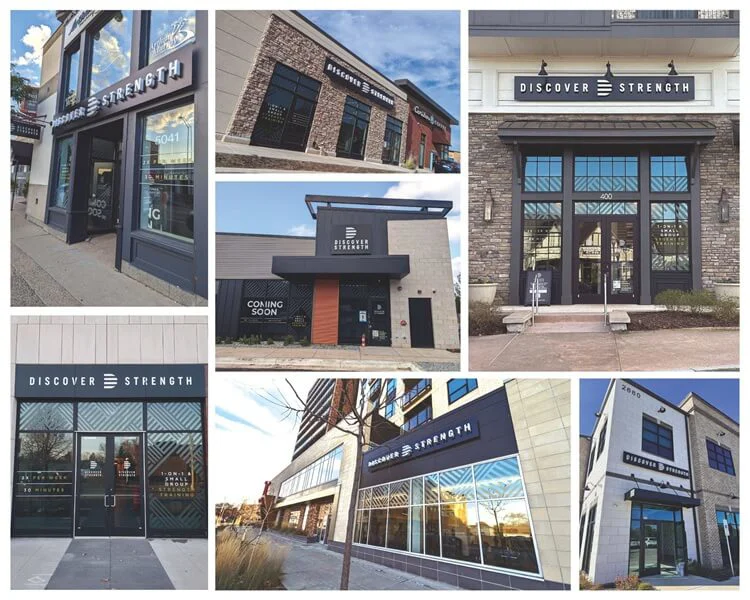
Managing multi-location signage across dozens or hundreds of franchise locations usually starts with a simple goal: make the brand look identical everywhere. But between local zoning laws, distinct architectural footprints and rogue franchisees ordering off-script, the reality quickly turns into a logistical nightmare. Achieving true consistency at scale isn't just about handing out a brand guidelines PDF; it requires a systematic framework that transforms spaces seamlessly, no matter the zip code.
Establishing a cohesive multi-location signage program balances rigid centralized brand integrity with the flexible site-specific execution each location demands. This guide outlines a proven five-phase approach to auditing, designing, specifying and deploying a scalable signage system that protects your equity and eliminates location-by-location friction.
By the end of this blueprint, you'll see how managing a multi-location signage rollout doesn't have to fall entirely on your internal operations team, especially when you have a dedicated national partner like FASTSIGNS managing the scale, compliance and rollout for you.
Phase 1: Establish Centralized Brand and Visual Standards
Brand consistency across locations is essential to building trust and projecting professional authority. Before any physical signs are fabricated, define a unified visual standard that guides every asset:
Color Matching Accuracy: Maintain strict adherence to your brand color palette. For secondary design elements or visual depth, specify value shifts of no more than in Hue, Saturation, and Brightness (HSB) to guarantee a polished, harmonious aesthetic across all layouts.
Unified Typographic Rules: Dictate exact font families and case usage (such as initial-case vs. uppercase mandates) to establish a clean visual rhythm.
Consistent Visual Motifs: Integrate repeatable visual motifs such as defined holding shapes, borders or specific punctuation layouts (e.g., using single quotation marks in small configurations and double quotation marks in larger spaces) to create an instant brand cue that audiences associate with your business.
Brand Voice Alignment: Align visual designs with a specific brand personality (e.g., confident, experienced and helpful rather than corporate and inflexible) to drive client connection and intimacy.
How Brand Consistency Won Juici Patties Nationwide
A FASTSIGNS location earned preferred vendor status for Juici Patties’ 15 South Florida locations, and exclusive national printing rights for all 35 U.S. restaurants, by leading with brand consistency and an unyielding commitment to client service. “In the first conversation, our keyword was brand consistency,” shared Outside Sales Professional from FASTSIGNS of Hollywood, Florida®, Rudolf Derose. “They realized that we were aware of that necessity, and we won the project by starting there.”
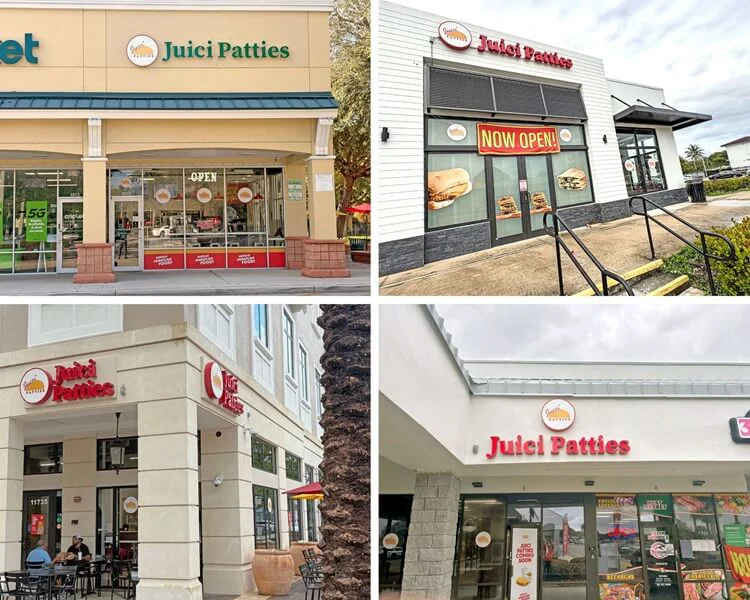
FASTSIGNS earned preferred vendor status for Juici Patties' 15 South Florida locations and exclusive national printing rights for all 35 U.S. restaurants by maintaining brand consistency across locations.
Moving far beyond basic fabrication, the team consistently goes to bat for the brand, navigating complex city regulations and fighting restrictive landlord guidelines in strict developments. Whether negotiating landlord exceptions for the logo or spending months working directly with city reviewers to engineer compliant signage solutions, FASTSIGNS proves that true value relies on commitment, honesty and accountability. By protecting the client's visual identity, absorbing costs when necessary to ensure satisfaction and delivering uncompromised support, FASTSIGNS transformed a routine vendor agreement into a trusted, long-term partnership. “They trust me, I trust them and we work together,” said Derose.
One Brand, Many Fronts: Achieving Visual Unity Across Multiple Locations
FASTSIGNS brought The B-12 Store's brand vision to life across multiple retail locations by producing custom exterior channel letters, clear menu boards and welcoming window graphics. Navigating tight deadlines, shopping center restrictions and strict insurance requirements, FASTSIGNS meticulously coordinated every detail to ensure brand consistency at each store. Their proactive oversight and hands-on management streamlined the complex, multi-site installation process to keep all grand openings on schedule. Ultimately, this partnership delivered a cohesive, highly visible retail environment that boosted brand recognition and successfully drove customer traffic.
“FASTSIGNS is the ideal provider for these types of projects, and a multi-location project of this scale was possible because our team is committed to giving our clients the consistency in branding,” shared Certified Sales Executive in Puerto Rico, Rebecca Belgodere.
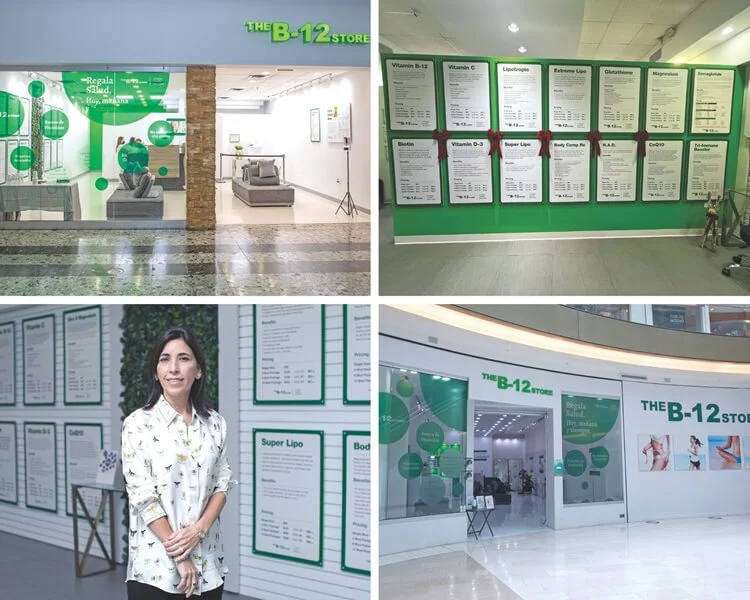
FASTSIGNS helped The B-12 Store maintain consistent multi-location signage and branding across locations while keeping each grand opening on schedule.
Phase 2: Execute Site-Specific Audits and Needs Analysis
While brand standards are centralized, physical footprints differ. A successful rollout requires a Visual Communications Needs Analysis and a site-level walkthrough for each property.
Audit the Guest Journey: Physically walk each location to experience exactly what a client or visitor sees, starting from the property entrance to parking lot navigation, then to the building entrance, reception and final destination (such as conference rooms, restrooms or service counters).
Identify Local Gaps: Map out critical navigation bottlenecks, areas of visitor confusion, outdated directory listings and worn or weathered branding elements.
Determine Local Regulations: Signage codes, permitting requirements and compliance standards vary by jurisdiction. Work with localized data to ensure proper permitting and pass local municipal audits without delays.
Phase 3: Design a Tiered Wayfinding and Regulatory Blueprint
A cohesive system features layered signage tiers that work together to guide visitors naturally through physical spaces:
Tier 1: Building and Site Identity: Anchor property perimeters with high-durability external identification, such as custom-carved monument signs, pylons and illuminated building channel letters to project structural strength and brand permanence from a distance.
Tier 2: Directional Wayfinding: Guide vehicles and pedestrians with intuitive parking structures, site maps and directional and floor graphics to minimize stress and prevent traffic bottlenecks.
Tier 3: Interior Branding and Environment: Turn empty spaces into branded client environments using large-format wall murals, frosted privacy glass films, dimensional lobby logos and elevator directories.
Tier 4: ADA and Regulatory Compliance: Never sacrifice branding for compliance. Deploy custom, brand-compliant Americans with Disabilities Act (ADA) signs featuring Braille and tactile lettering to guarantee universal accessibility while preserving your aesthetic theme. Ensure all safety signage (OSHA, fire egress maps, hazard placards) is Z535-compliant and clearly visible.
Phase 4: Standardize Durable Substrates and Material Specifications
Multi-location programs demand robust, commercial-grade substrates that withstand high traffic and weathering to preserve their allure for years to come. Select and specify materials based on site applications:
For Exterior Durability (Long-Term): Specify Aluminum (.040", .080", or .125") for parking, wayfinding and exterior building signs. It is lightweight, resists high winds and does not rust. Use Aluminum Composite Material (ACM) for highly durable, dual-use flat panels.
For Interior Aesthetics (Long-Term): Standardize on Acrylic (ranging from 1/8” to 1” thickness) for lobby signs, directories and awards. It is translucent, lightweight, highly durable and easily shaped. Use Foam PVC (3mm to 12mm) as a budget-friendly option for interior dimensional lettering and point-of-purchase displays.
For Dimensional Architectural Detailing: Utilize High-Density Urethane (HDU) for lightweight dimensional exterior letters, as it will not rot and is easily sanded or sandblasted. For large-format site V-boards, use MDO Plywood (1/2” to 3/4”) to guarantee outdoor performance up to 5+ years.
For High-Impact Temporary Campaigns: Deploy Corrugated Plastic (Coroplast) for inexpensive temporary roadside yard signs, and specify grommeted, webbing-reinforced 14-ounce Banner Material for outdoor seasonal promotions and event backdrops.
Phase 5: Streamline Procurement and Portfolio-Level Rollouts
The greatest challenge of a multi-location signage project is execution at scale. Fragmented purchasing across different local sign companies leads to inconsistent colors, misaligned materials and varying installation standards.
Partner with a Single-Source Provider: Consolidate your program under a single visual communications partner who can coordinate design, color-matching, material replication, permitting and installation across your entire network.
Find a Provider Who Offers Ecommerce Options: A private ecommerce storefront centralizes multi-location signage rollouts by giving decentralized teams 24/7 access to pre-approved, brand-compliant templates while routing orders directly through your existing Enterprise Resource Planning and procurement systems. This streamlines fulfillment to hundreds of sites, eliminates design errors and maintains strict brand and budget control across every project.
Appoint Unified Stakeholders: Align with internal multi-site decision makers such as Regional Portfolio Managers, District Sales Directors and Franchise Brand Compliance Managers. Consolidating procurement under one regional standard ensures visual consistency, simplifies ordering with a single point of contact and unlocks volume discounts and more.
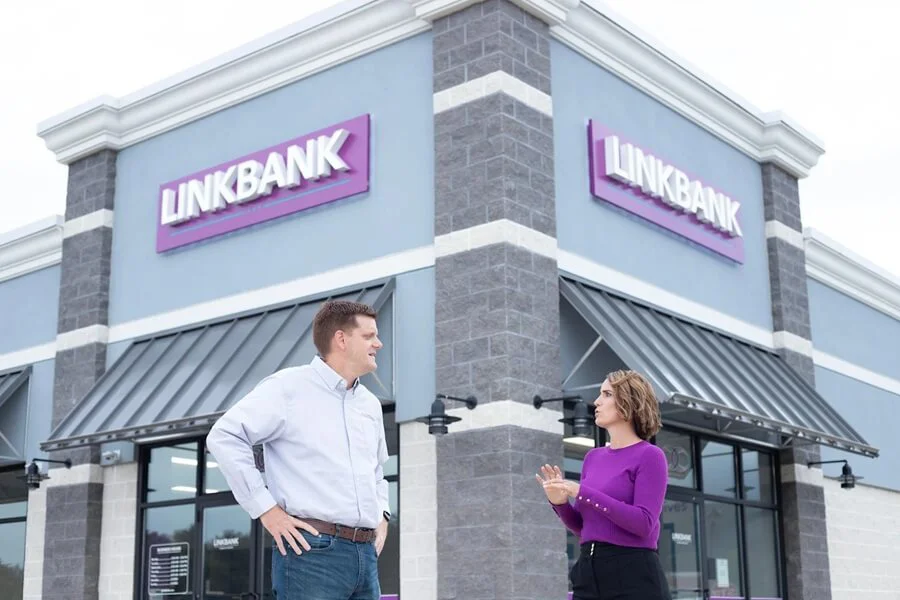
From initial consultation through a multi-location signage rollout, FASTSIGNS partnered with LinkBank to maintain consistent signage across its expanding network.
Bank Makes Big Impression at New Location with Visual Solutions
When opening a new solutions center in Harrisburg, Pennsylvania, LinkBank partnered with FASTSIGNS to establish a strong regional presence using vibrant, custom exterior and interior visual solutions. The project transformed the site into a fully branded space featuring halo-lit exterior signage, dimensional lobby lettering, directional window vinyl and custom acrylic panels. Because of the project's success, LinkBank scaled these exact design specifications across its multi-location expansion, using the template for a new facility in West Chester and later rolling out a five-state acquisition that included branding locations in Pennsylvania, Maryland, Virginia, New Jersey and Delaware.
“FASTSIGNS brings tremendous value to clients seeking multi-unit signage through a deep consultative process and one-stop project management capabilities,” shared franchisee Jon Toy. “When initial conversations start, the Visual Communications Expert immediately begins organizing the data, scoping out the work by site, discussing due dates, creating project plans and timelines and communicating expectations all along the way. As projects commence, the FASTSIGNS team sets up meetings to discuss progress, captures completed photos and continues to ensure full customer satisfaction. FASTSIGNS provides the professionalism of a national firm, with the local relationship you trust and enjoy working with.”
3 Questions to Ask Before Starting a Multi-Location Signage Rollout
Before kicking off a multi-site sign initiative, asking the right questions internally prevents costly delays, vendor misalignments and compliance headaches down the line:
1. Do we have a single, centralized point of contact to manage permitting across different municipalities? Every city, county and shopping complex enforces distinct zoning laws and permitting timelines. Attempting to manage local municipal reviews across dozens of locations with fragmented teams creates severe scheduling bottlenecks.
2. How will we enforce brand consistency across decentralized locations or franchisees? Without a standardized ordering channel or approved vendor list, local managers often order off-script. Ask whether your signage partner provides a central ordering platform or private e-commerce portal to maintain strict color and design compliance across all units.
3. Are our visual standards adapted for site-specific architectural differences? A design layout that looks great on a standalone building may fail completely on a historic storefront or multi-tenant shopping center. Determining how your visual identity translates across varied building footprints before production ensures every site looks intentional and uniform.
Find Your Multi-Location Signage Partner
When you have a large-scale, multi-location signage project, that’s not a project to assign to just anyone. From establishing consistent visual standards to gathering site needs and then fabrication, shipment and streamlining rollouts, having one point of contact and someone that you can trust is imperative. As the leader in the custom signs and visual solutions industry with over 40 years of experience, FASTSIGNS helps customers bring their vision to life and achieve more than they ever thought possible.
Contact FASTSIGNS to begin planning your visual communication strategy today.