Key Takeaways:
Layering different types of storefront signage creates a cohesive visual system that maximizes visibility and attracts more customers.
Choosing the right sign materials, lighting and placement is essential for brand recognition, compliance with local codes and long-term durability, ensuring your investment delivers ongoing value.
Modular and eco-friendly signage solutions offer flexibility for seasonal promotions, easy updates and sustainable practices, allowing your business to adapt and grow efficiently over time.
Your sign is doing sales work while you're not there. The right mix of lighting, materials and placement can turn someone who was just walking by into a customer who walks in.
That's what smart storefront signage does. FASTSIGNS helps business owners combine different sign types to get maximum impact across any budget — from illuminated channel letters to window graphics that stop foot traffic cold.
Ready to design signage that works as hard as you do? Find your nearest FASTSIGNS location or request a quote to get started.
What Counts as a Storefront Sign
Storefront signs fall into three buckets depending on the job you need them to do.
Primary identification signs like channel letters and monument signs are built for distance. They are capable of grabbing attention from almost a block away. Close-range signs like window graphics and dimensional letters persuade potential customers walking by. Promotional signs like A-frames and changeable letter boards help to convince people to act right now.
A few things shape every signage decision before you even pick a material. Local rules vary a lot: some cities require permits for anything over six square feet and ADA compliance affects mounting height and contrast requirements. Illuminated signs need electrical access. Vinyl banners may need replacing seasonally. The storefronts that perform best usually layer a few sign types. A monument sign for drivers, for example, paired with window graphics appeal to pedestrians who are already close.
1. Light Up the Night With Illuminated Storefront Signs
Illuminated signs keep your business visible after dark. Here's what makes them work:
LED cabinet signs and halo-lit channel letters are readable from blocks away, catching evening joggers and late commuters who weren't planning to stop
Modern LED tech delivers strong, consistent light at around 75% less energy than older fluorescent setups
A photocell sensor turns the sign on at dusk and off at dawn automatically, no thinking required
2. Build Brand Presence With Channel Letter Signs
Channel letter signs make your name hard to ignore and the lighting style you choose influences how that name feels to the reader. Front-lit letters push light through the face for raw visibility from a distance. Halo-lit letters take a different approach, casting a soft glow behind each letter that reads as premium without being loud. Once you've settled on the look, your building facade and local codes will determine whether raceway mounting or individual letter installation makes more sense. No matter your preference, powder-coated finishes and quality acrylic faces hold up through heat, rain and everything between.
3. Turn Windows Into Billboards With Storefront Graphics
Your windows are free marketing space and most businesses leave them blank. Window graphics change that without sacrificing the bright, open feel inside:
Perforated vinyl lets you display schedules and photos facing outward without blocking natural light
Changeable graphics allow you to update messaging for seasons or promotions without redesigning your whole storefront
Frosted film adds privacy for consultation rooms or personal training areas while giving the space a polished, upscale look
Removable options protect your lease and keep future updates simple
4. Add Depth With Dimensional Letter Signage
Flat graphics blend into flat buildings, especially when harsh midday sun diminishes color and contrast. Dimensional letters solve that by casting real shadows, so they read differently depending on the angle and time of day. Physical depth can improve sign legibility by up to 30% compared to flat graphics. Standoff mounts lift the letters a few inches from the facade, which gives the installation a cleaner, more intentional look and makes the shadows more pronounced. Add subtle downlighting and the sign stays strong into the evening. These architectural elements translate well across building styles too: brick, glass, concrete, it doesn't matter.
5. Shade, Shelter and Style: Awning Signs With Branding
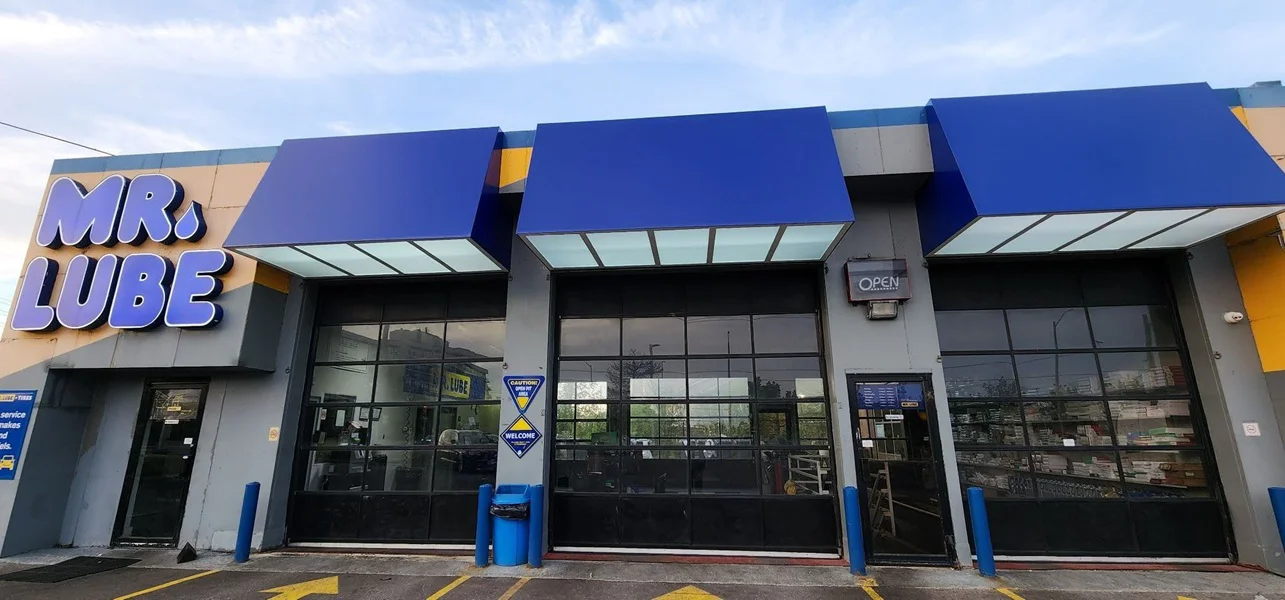
A good awning keeps customers comfortable and earns its place as a branding surface at the same time. For cafes, fitness studios and retail shops, the entrance experience starts before anyone reaches the door and the awning is often the first thing they see. Marine-grade fabric holds your logo colors after years of sun exposure, while the valance at eye level gives pedestrians somewhere to read your address or tagline as they approach. Aluminum frames and UV-resistant graphics keep the whole structure standing through wind, rain and daily wear.
6. Catch Sidewalk Traffic With Blade Signs
Most signs only face one direction, which means half the people walking past never see them. Blade signs fix that by projecting perpendicular from your building, making them visible to people walking toward you and people walking away. That double exposure matters on a busy sidewalk where attention is scarce.
Because viewers are moving when they spot the sign, the design needs to be clean and immediate: a strong icon, a short name and high contrast. Cluttered layouts lose people before they've had time to read them. For example, Red Wagon Pizza Company used logoed blade signs as part of a broader program and saw real results capturing that passing traffic.
7. Go Dynamic With Digital Storefront Displays
Digital displays give you something static signs can't: the ability to match your message to whoever is walking by right now. Morning content for early risers, lunch specials at noon, evening promos when commuters walk past on their way home. Since people give digital signs 10-15 seconds of attention, getting the timing right is essential for a functional display.
8. Get Noticed Fast With Custom Vinyl Banners
If you decide on Monday to run a special, you can have a banner installed by Wednesday. That kind of turnaround is what vinyl banners are built for - with most orders ready in 24-48 hours. When speed is important, it helps to ask for reinforced edges, since strengthened borders prevent tearing in high-traffic spots.
Get your message up in days - Most banners are ready within 24-48 hours, so you can respond quickly to new opportunities or seasonal trends
Ask for reinforced edges and corners - Heavy-duty vinyl with strengthened borders prevents tears and extends banner life in busy areas
Request wind slits for outdoor use - Small cuts in the material let air pass through, reducing strain on your banner and mounting hardware
Keep text large and simple - Bold fonts and high contrast colors work best for people walking or driving past your location
Choose durable materials for longer campaigns - Heavy-duty vinyl resists fading and weather damage better than lightweight options
Plan for reuse and storage - Quality banners can be rolled up and saved for future promotions, giving you more value from each design
9. Create a Landmark: Monument Signs for Entrances
A monument sign turns your address into a place people actually remember. These freestanding structures sit near your entrance at ground level, giving drivers, rideshare passengers and delivery services a real visual anchor rather than just a GPS pin. When clients start telling people "look for the stone sign with the blue letters," that sign is doing marketing on its own. Premium materials like natural stone veneer, brushed aluminum or architectural concrete reinforce a sense of permanence that matters to first-time visitors that evaluatewhether your business is established and worth trusting.
10. Choose Greener Options With Eco-Friendly Storefront Signs
Sustainable signage is worth considering for practical reasons as much as values-based ones. Eco-friendly options tend to last longer, run cheaper and a growing number of customers actively notice when a business takes this seriously.
Request recyclable substrates and low-VOC inks - Aluminum, certain plastics and water-based inks, minimize environmental impact and often meet local air quality requirements
Specify ENERGY STAR certified LED lighting - These displays use up to 40% less energy than standard options and last significantly longer, reducing both utility bills and replacement frequency
Choose modular designs for easy updates - Replaceable panels and components allow you to refresh messaging without discarding entire signs, reducing waste and future costs
Invest in commercial-grade weather protection - Powder coatings and durable finishes extend sign life by years, reducing the need for premature replacements
Work with sustainability-focused sign partners - FASTSIGNS maintains an environmental promise that includes sustainable practices and material choices throughout the production process
Plan for end-of-life reuse - Quality sign components can often be repurposed for interior displays, promotional materials or donated to community organizations
11. Update Messages in Minutes: Customizable Letter Boards
New class this week. Holiday hours are changing. Deal running through Sunday. Customizable letter boards handle all of it without a print order, letting you change letters in minutes rather than waiting on new graphics. Both magnetic graphics and traditional letter track systems give you that flexibility. Placement matters as much as the sign itself: set them at eye level near your entrance where people naturally pause and use bold, sans-serif letters that read cleanly from several feet away.
12. Retro Vibe, Modern Tech: Neon-Inspired LED Signage
The appeal of classic neon is the warm, inviting glow it creates, the kind that makes a space look like somewhere worth entering. LED technology now replicates that look without the fragility or cost of glass tubes, drawing far less power and lasting significantly longer. Flexible LED strips can bend into custom shapes, form phrases or trace your logo in whatever style fits your brand. The smart installation move is mounting them inside your windows: you get full street visibility while staying outside most exterior signage codes and keeping the installation straightforward.
13. Guide the Flow With Wayfinding and Directional Signs
Picture a first-time client rushing to your fitness studio for a morning class. A first-time visitor running late doesn't want to circle the block guessing which door is yours. Good wayfinding signs prevent that frustration before it starts:
Create a clear path from parking and transit stops straight to your entrance with exterior arrows and entrance markers
Use consistent icons, colors and typography across every directional element so navigation feels intuitive rather than something people have to figure out
Include ADA-compliant elements like high-contrast text, correct mounting heights and clear pictograms to keep the system accessible and professional
Pair building numbers with clear entrance labels in multi-tenant buildings where multiple doors look identical
Consider digital options for complex layouts that need updating when schedules or entrances change
14. Welcome Walk-Ins With Branded Sidewalk Signs
Sidewalk signs work because they catch people at the exact moment they're deciding whether to stop. A-frame signs sit at eye level and can be angled toward the heaviest foot traffic, which puts your message directly in the line of sight during that split-second decision. Follow ADA placement guidelines so you're not blocking accessible routes on the sidewalk. Changeable inserts make these signs especially practical: you can highlight today's offer or a seasonal promo without ordering new graphics each time.
15. Stretch Your Budget With Smart, Modular Signage
You don't have to spend everything at once to build an effective signage presence. A phased approach lets you start strong and add layers, without committing to everything upfront. Begin with one solid primary identification sign, then bring in window graphics or a sidewalk sign once the foundation is in place. Choosing systems with interchangeable panels from the start means you can refresh promotions and schedules without replacing the full structure each time.
Storefront Sign Ideas: Frequently Asked Questions (FAQs)
Planning your storefront signage brings up practical questions about costs, timelines and performance. These answers help you make informed decisions and set realistic expectations for your investment.
How much should a small business budget for storefront signage?
Depending on size and complexity, most small businesses invest $2,000 to $8,000 for a complete storefront package. Start with one strong primary sign and add layers over time. Exterior signage options range from budget-friendly banners to premium illuminated displays.
What permits or code requirements typically affect storefront signs?
Local codes govern sign size, placement, lighting and materials based on zoning and historic districts. Most municipalities require permits for permanent installations like channel letters or monument signs, typically taking 2-4 weeks for approval. Check with your city planning office early in the design process to avoid delays.
Which sign types perform best on high-traffic urban streets?
Illuminated channel letters and digital displays excel in busy areas because they cut through visual noise. Blade signs capture perpendicular foot traffic effectively. Small business signage should prioritize visibility from multiple angles and quick readability.
What maintenance schedules keep signs looking new year-round?
Clean surfaces monthly with mild soap and soft cloths. Inspect lighting quarterly and replace bulbs promptly to maintain even lighting. Annual professional inspections catch wear and tear before it becomes visible. Well-made signs maintain their appearance for 5-7 years with proper care.
What timelines should be expected from design to installation?
Simple signs like banners or window graphics install within 1-2 weeks. Custom illuminated signs typically require 3-4 weeks for fabrication plus installation time. Permit approval can add 2-6 weeks depending on your location. Plan ahead for grand openings or seasonal campaigns.
Bring Your Storefront Vision to Life
Your storefront works around the clock to attract customers and communicate your brand. Research shows that consumers rely on signage more than other advertising when discovering new businesses. The right combination of illuminated letters, window graphics and directional elements creates a welcoming path from sidewalk to front door.
Custom storefront signs give you control over materials, lighting and messaging that reflects your unique brand personality. Local experts can provide accurate timelines and walk you through options that fit your budget and neighborhood requirements.
FASTSIGNS helps you choose materials, lighting and messaging that fits your brand and your neighborhood. Find a location near you or request a quote to get your personalized consultation.

